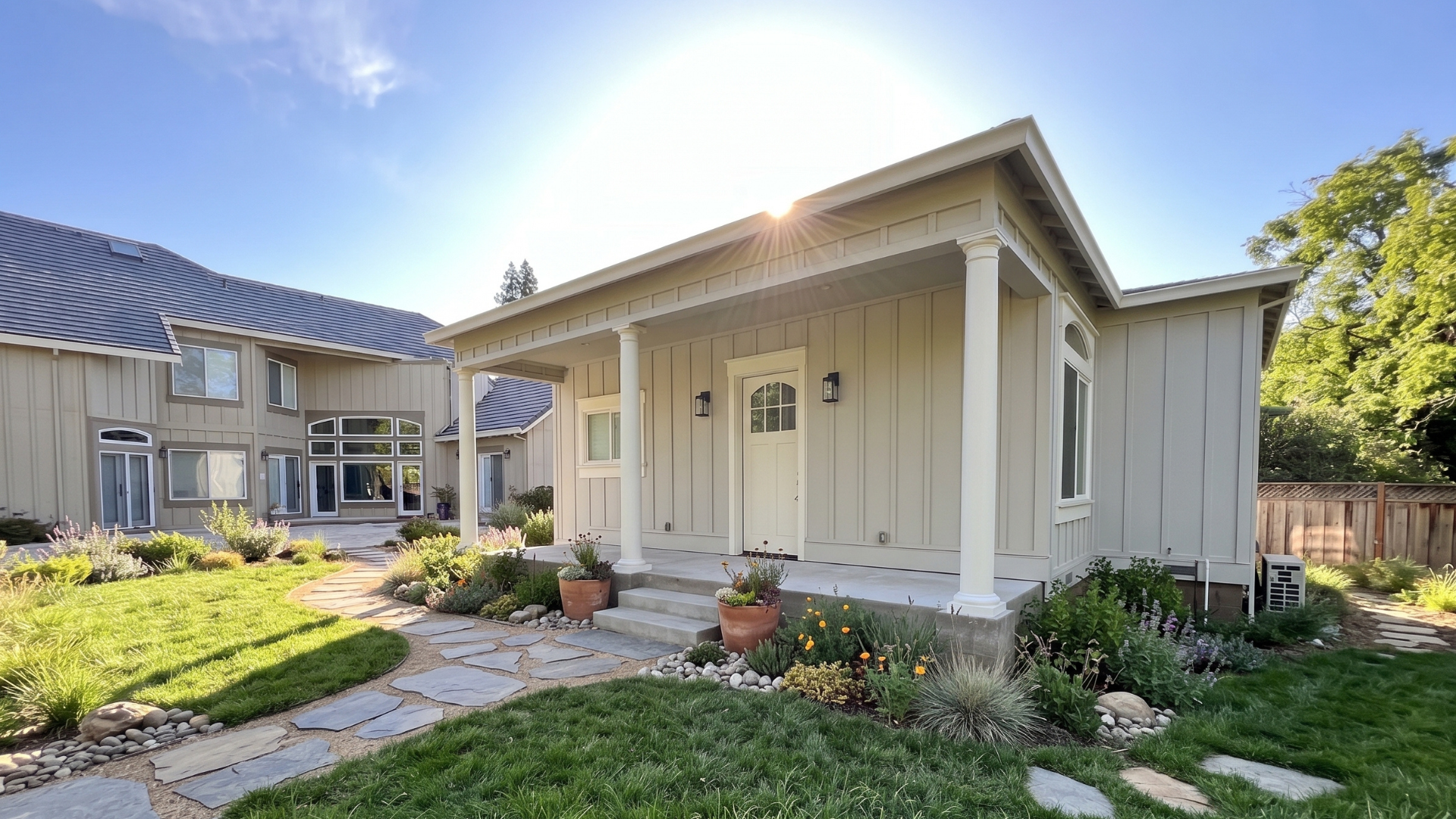
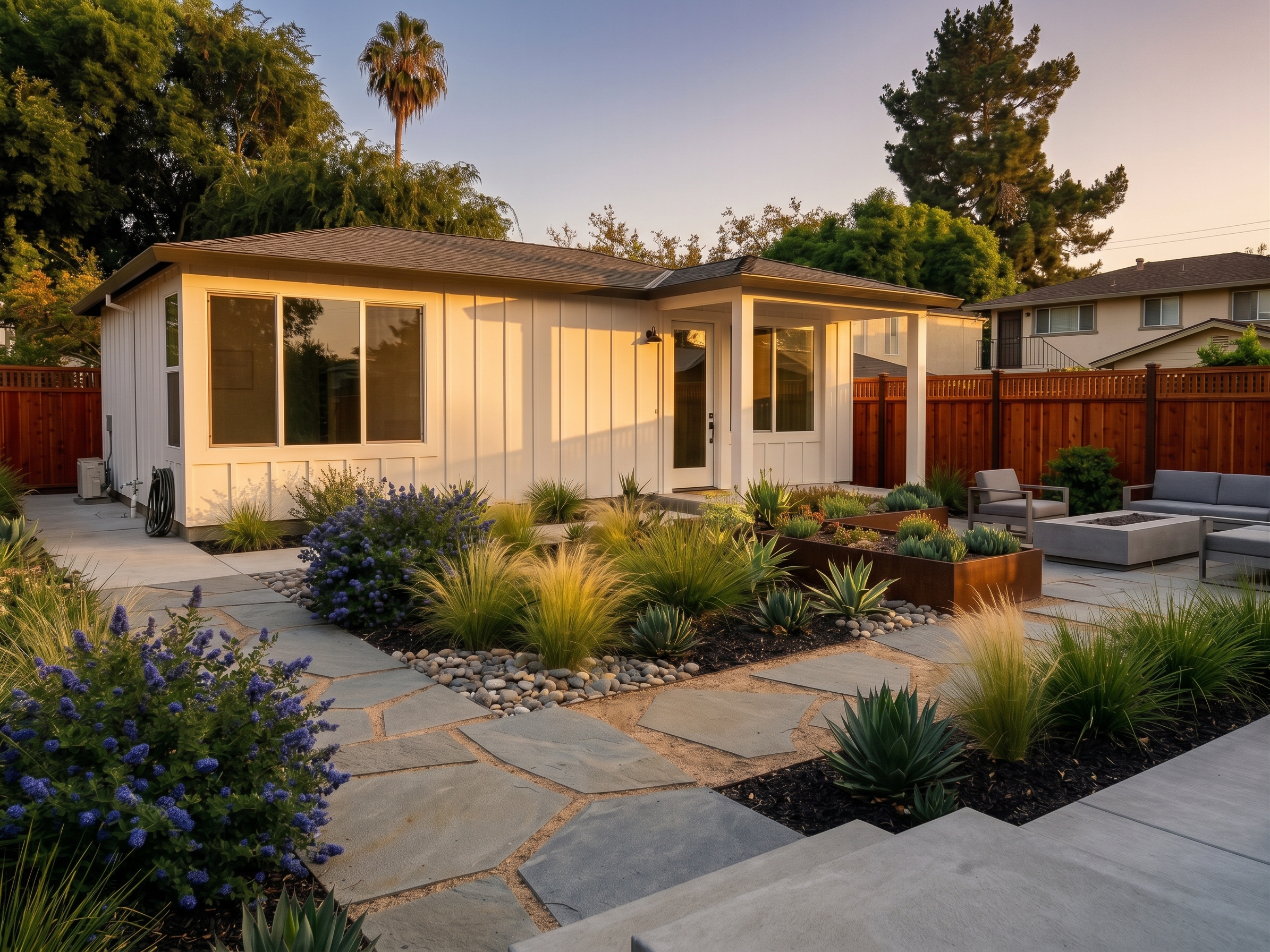
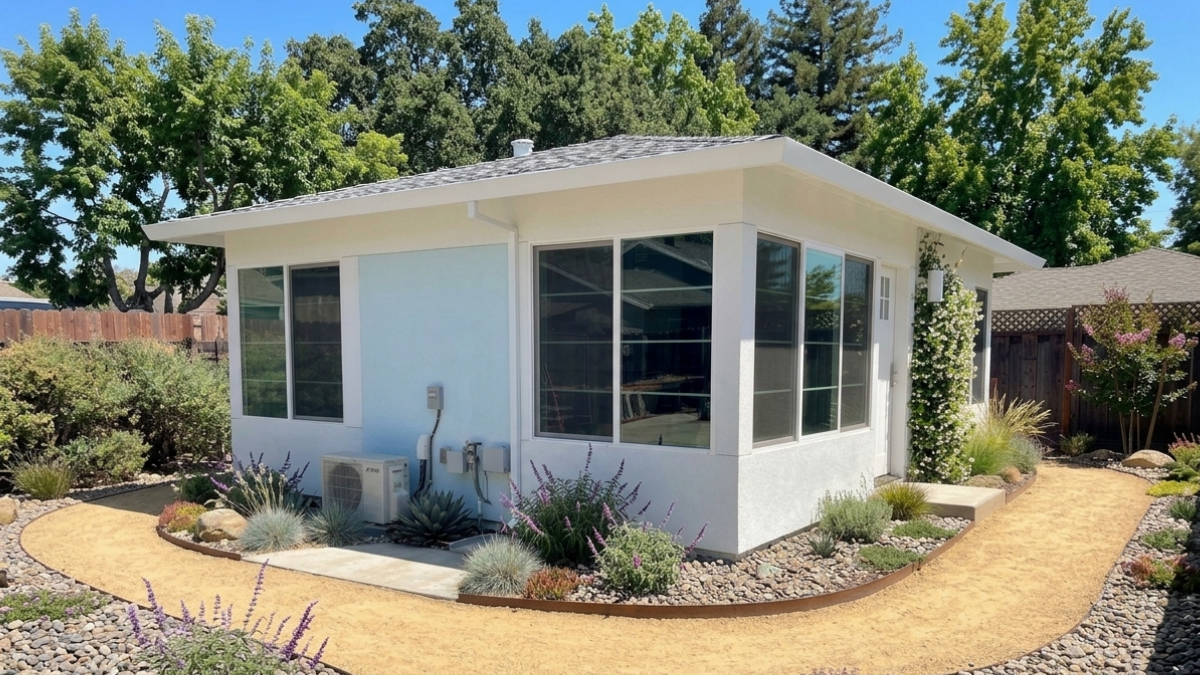
Yes, you can build an ADU in Charter Oak. It is unincorporated, so Los Angeles County rules apply: a detached ADU can be up to 1,200 square feet and 25 feet tall, set 4 feet from the side and rear property lines, with no parking on most lots.
Enter your address to find your property, explore your lot and view the plans that may fit it.
Charter Oak has no city government. Los Angeles County Planning reviews ADUs here, against written rules and with no public hearing.
Charter Oak is a mostly flat single-family community outside the county's fire hazard zones, so the standard county rules apply. Many homes here have Covina mailing addresses, which causes confusion: the county's rules, not Covina's, decide what you can build.
That difference is real. Covina and San Dimas hold most detached ADUs to 16 ft, while the county allows 25 ft. Glendora also allows 25 ft.
A single-family lot can have one ADU inside or attached to the house, one detached ADU and one Junior ADU. Size limits can be smaller when you combine them.
How big can an ADU be in Charter Oak? Up to 1,200 sq ft detached. An attached ADU can be up to half the size of the main house or 1,200 sq ft, whichever is less. Most lots have room for a one- or two-bedroom unit behind the house.
How tall? Up to 25 ft.
Setbacks? 4 ft from the side and rear property lines, and 6 ft between buildings. Conversions keep their existing setbacks.
Parking? None required outside a Very High Fire Hazard Severity Zone.
You apply online through EPIC-LA, the county's permit system. County Planning reviews zoning first, then Building and Safety reviews the construction plans.
State law gives the county 60 days to approve or deny a complete ADU application. Corrections and resubmittals add time.
Any Charter Oak lot zoned for a house or apartments can have an ADU, as long as a legal home exists or is proposed.
ADU regulations are constantly evolving and may vary by city, county, or even neighborhood. Before starting your project, it’s always best to consult with a trained professional or certified ADU Specialist to ensure your plans align with current local requirements.
ADU rules change often. This page is a general guide to help you get a sense of what may be possible where you live. It is not legal, zoning or permitting advice, it is no substitute for working with a qualified ADU professional, and it is not a promise that any project will be approved. We update these summaries as often as we can, but your city or county has the final say, and its current code always controls. Before you design, budget or build, confirm the requirements for your property with your local planning and building department.