California is losing its next generation to housing costs. Kids who grew up here can't afford to stay near their parents. Parents who built a life here can't afford to age near their kids, or to pay for the care they'll need. And the families already squeezed by their own housing costs are the ones asked to carry it all.
If you own a home, the answer may be sitting in your backyard. And most families don't know it yet.

Family Integrity Planning is a way for California homeowners to keep generations close, care for the people they love, and grow lasting value in the place they already call home. In practice, it usually means adding an accessory dwelling unit (ADU) to your property so aging parents, adult children, or a caregiver can live steps away while having thier own front door. All while your family builds equity instead of paying rent or care-facility bills.
Housing costs here rise faster than wages, and the people who feel it first are the ones at either end of a family: the kids trying to start out and the parents trying to stay put. Three pressures show up again and again in the homes we visit.
Adult children who grew up in your neighborhood can't buy or rent anywhere near it. So they leave, and the grandparents, Sunday dinners, and built-in childcare go with them.
The parents who built a life here can't downsize near their kids, and when they need care, a facility bed or in-home caregiver can cost more each month than a mortgage.
Homeowners carrying their own housing costs are asked to also fund elder care and help their kids launch. Something has to give. Too often, it's proximity.
An ADU is the one kind of housing a homeowner can create on their own, on land they already own, for the people in their lives most affected by the housing crisis. You don't need a developer, a vote, or a decade of policy to catch up. You need a plan and a builder who can carry it through.
That is what makes it personal. An ADU helps real people, quickly, and it puts the decision back in your hands.
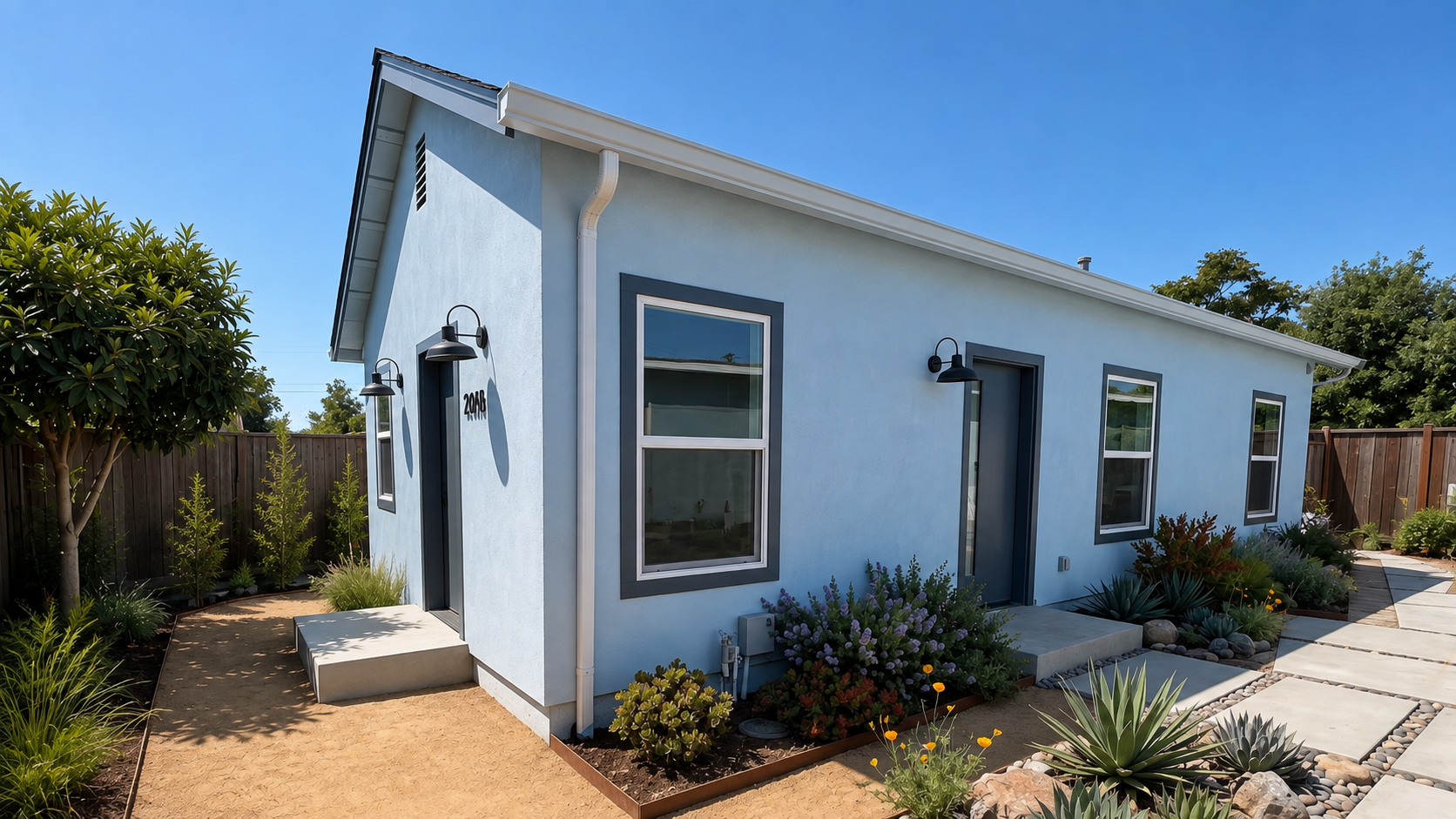
Most families start with one person in mind. The plan works because the space keeps working after that person's needs change.
You are not an outlier. About 59.7 million Americans, 18% of the population, live in a multigenerational household, up from 7% in 1971. Pew Research Center, 2022
A step-free, single-level home where Mom or Dad keeps their independence and you are thirty feet away when they need you. No facility, no long drives.
A real place to land after college, during a career change, or while saving for their own home, without moving back into their childhood bedroom.
Housing for a live-in caregiver, a sibling who helps with the kids, or a grandparent who wants to be part of daily life rather than a holiday visitor.
Move into the ADU yourself and let the next generation take the main house. The property, the neighborhood, and the family stay intact.
Rent the ADU for a season of life. The income offsets your mortgage or care costs and keeps the family on the property until it is needed again.
Most families are two of these at once. Start with a 20-minute call and we will walk through your property and what it can hold.
Families often start with one number: what the ADU could rent for each month. The savvier way to look at it is in three buckets, and rent is the smallest of them.
A well-designed, traditionally built ADU is often appraised at a similar price per square foot as the main home. Appraisals on our completed projects consistently show homeowners adding more value to the property than they invested.
Once the value is added, the ADU appreciates with the rest of your home. Ten or fifteen years out, that can mean hundreds of thousands of dollars in additional family wealth that passes to the next generation.
Rent helps with the mortgage. Just as real is the money a family does not spend: a care facility bed, a second rent check for an adult child, or a caregiver's housing.
Equity and appreciation figures are illustrative and vary by property, city, design, and market conditions. Talk with an appraiser or financial advisor about your own situation.
The plan comes before the floor plan. Here is the sequence we walk families through.
Who might need housing in the next 5 to 30 years? What care or support will they need? Ask it out loud, together.
Lot size, setbacks, utilities, access, and your city's rules decide what is possible and what it will cost before any design is drawn.
Pick from the Build Ready library, including Aging-in-Place plans with step-free entries, or design custom. Match it to the job it needs to do.
Budget, financing, timeline, and who lives where during construction, built on a feasibility package designed to eliminate surprises before you sign.
We permit and build it start to finish. Then the plan keeps working as your family changes, because the home was designed to.
We start every plan by asking how the people inside will actually use it, now and later. That is why aging-in-place features are built in from the start rather than retrofitted, and why privacy is treated as a design requirement, not a nice-to-have.
Every Acton ADU is traditionally site-built to California residential standards under local permits and inspections, the same as your main house. It is a home, not a box in the backyard.
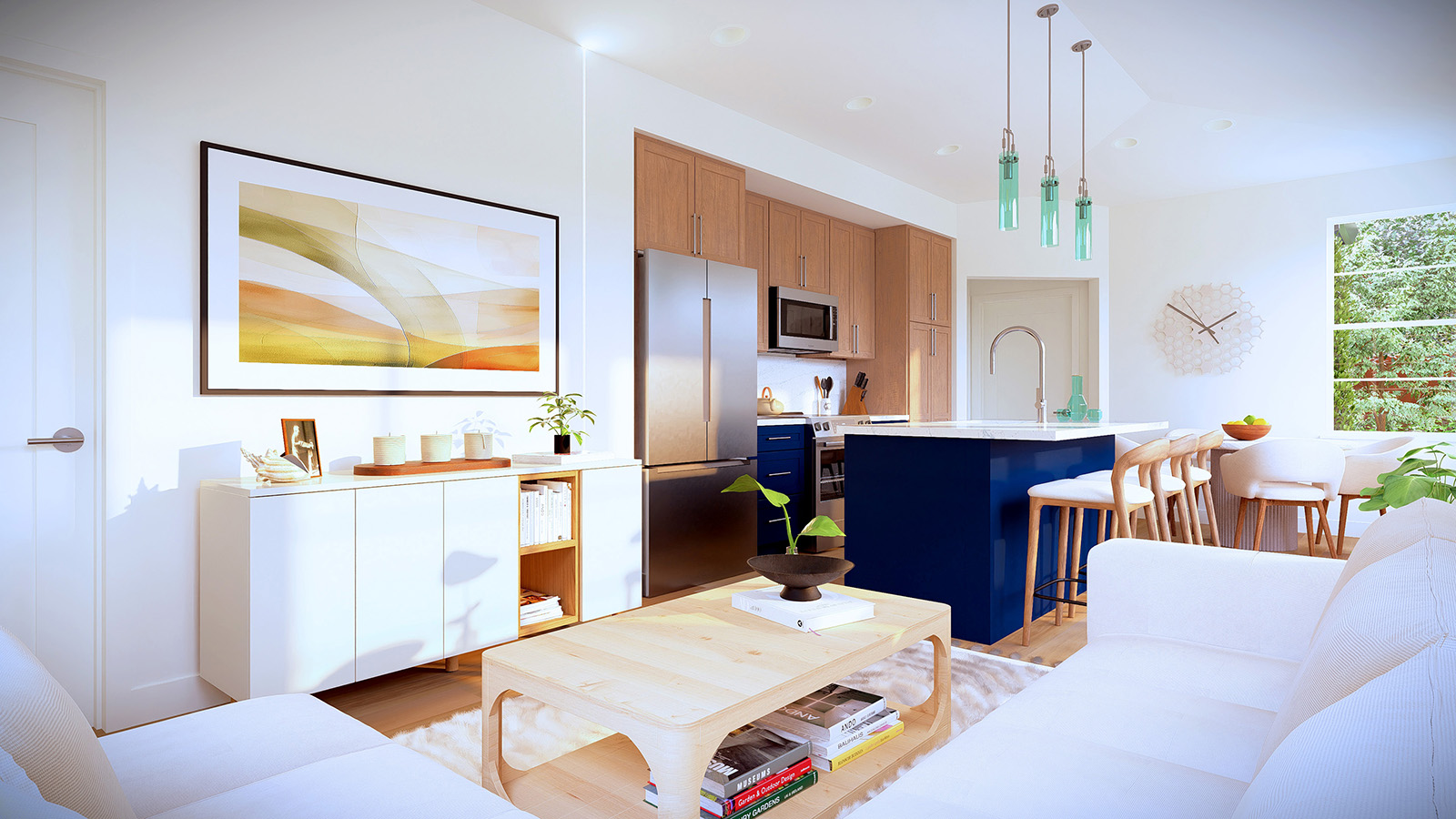
State law requires every California city and county to allow ADUs on most residential lots, and recent legislation has steadily removed the old barriers: owner-occupancy requirements, most parking mandates, and long approval windows. What remains is local: size limits, setbacks, height, utility connections, and fees vary from one city to the next, and sometimes from one street to the next.
Navigating that is part of what you hire us for. We work across Santa Clara, San Mateo, Alameda, and Contra Costa counties and in the San Gabriel Valley, the Westside, and Central LA, and we read your lot against your city's rules before anyone quotes a number.
The results are visible statewide: ADU permits grew more than 15,000% between 2016 and 2022, and by 2022 roughly one in five new housing units produced in California was an ADU. California YIMBY, ADU Reform Retrospective. The state's current rules are summarized by the California Department of Housing and Community Development.
Learn the rules, timelines, and budgeting at our next webinar →
Stan Acton founded the company in 1990 and spent thirty years building homes across the Bay Area. In 2017 he saw what rising housing costs were doing to California families, named the problem Family Integrity Planning, and reshaped the company around solving it. Homeowners choose Acton when they want certainty, quality, and a home that performs for decades.
Design-build experience across hundreds of Bay Area families, now serving Los Angeles County too.
Pre-designed, engineered, and permit-ready ADU plans, including an Aging-in-Place series, each named after a California tree.
Every project starts with a feasibility package designed to eliminate surprises: we understand your property and your city's rules before anyone quotes a number.
No. It is a plan for how your family will live, care for each other, and hold onto value over the next 10 to 30 years. An ADU is usually the most practical tool for carrying out that plan, which is why we build them, but the planning conversation comes first.
In most cases, yes. State law requires cities and counties to allow at least one ADU on most residential lots. Size, placement, and utility details depend on your city and your specific property, which is why we review the lot before recommending anything.
That is the point. An ADU is a complete home with its own kitchen, bathroom, and entrance. Parents keep their routine and independence; you are steps away when they need help.
Over time it often is. Care facility costs are a monthly expense that never comes back. An ADU is a one-time investment that adds appraised value to your property, can be rented later, and keeps the family together while a parent ages in place. Your own numbers depend on the level of care needed and your local market.
A well-designed, traditionally built ADU is often appraised at a similar price per square foot as the main home, and appraisals on our completed projects consistently show homeowners adding more value than they invested. Results vary by property and market.
A pre-designed, site-built ADU from Acton's library of more than 100 plan and curated interior and exterior packages ready to submit for permits. It saves time and money without sacrificing quality, and it is still built on site to the same standards as a custom home.
Timelines depend on your city's permit process and the home you choose. Acton Build Ready ADU plans shorten the design phase considerably. We set milestones up front and protect them, and we tell you what to expect before you sign. If a Build Ready ADU is chosen, with no changes exactly as it was permitted before by another homeowner, that timeline reduces again considerably.
Nothing at first. A 20-minute call with an Acton ADU specialist is free, with no sales pitch and no obligation. We start by understanding your needs and property from a top level. Then the next step is a Feasibilty Package, a $500 research assessmet where we dive deep into your physical property attributes, city regulations, and property research to prepare a path forward with a real, grounded price for your project.
A 20-minute call with an Acton ADU specialist. No sales pitch, no obligation. We will look at your lot, your city's rules, and who the home is for, and tell you plainly what it would take.