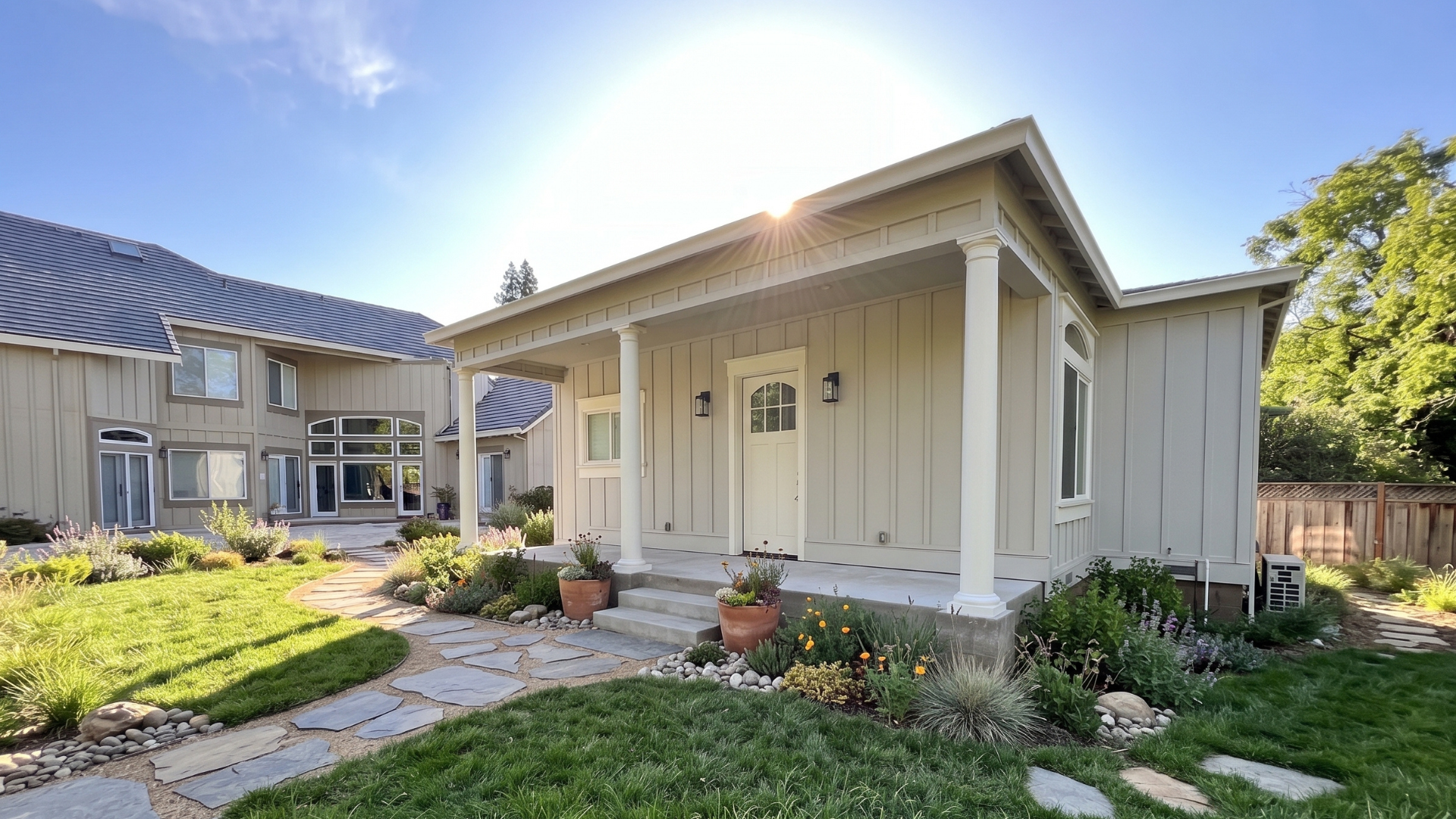
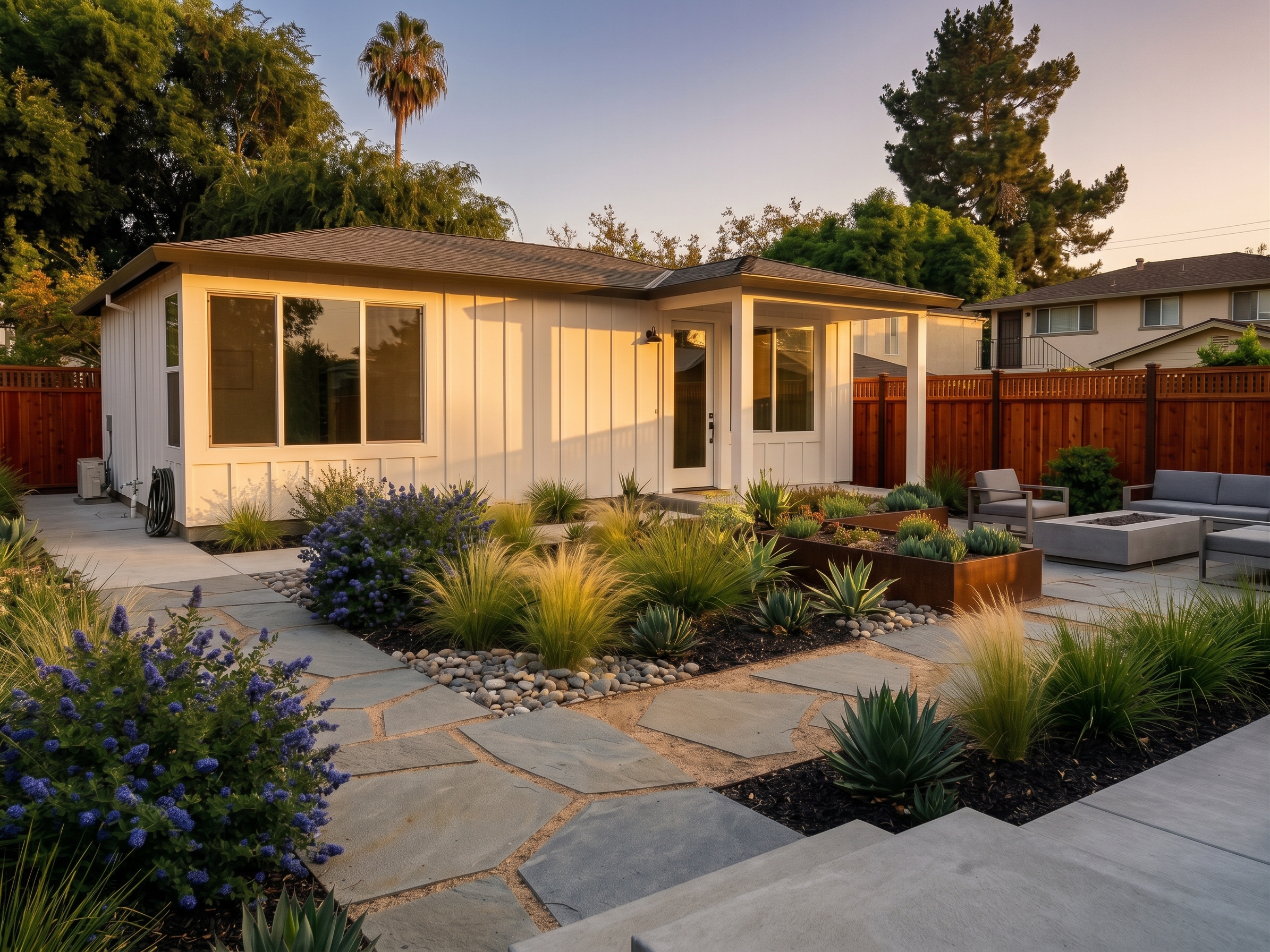
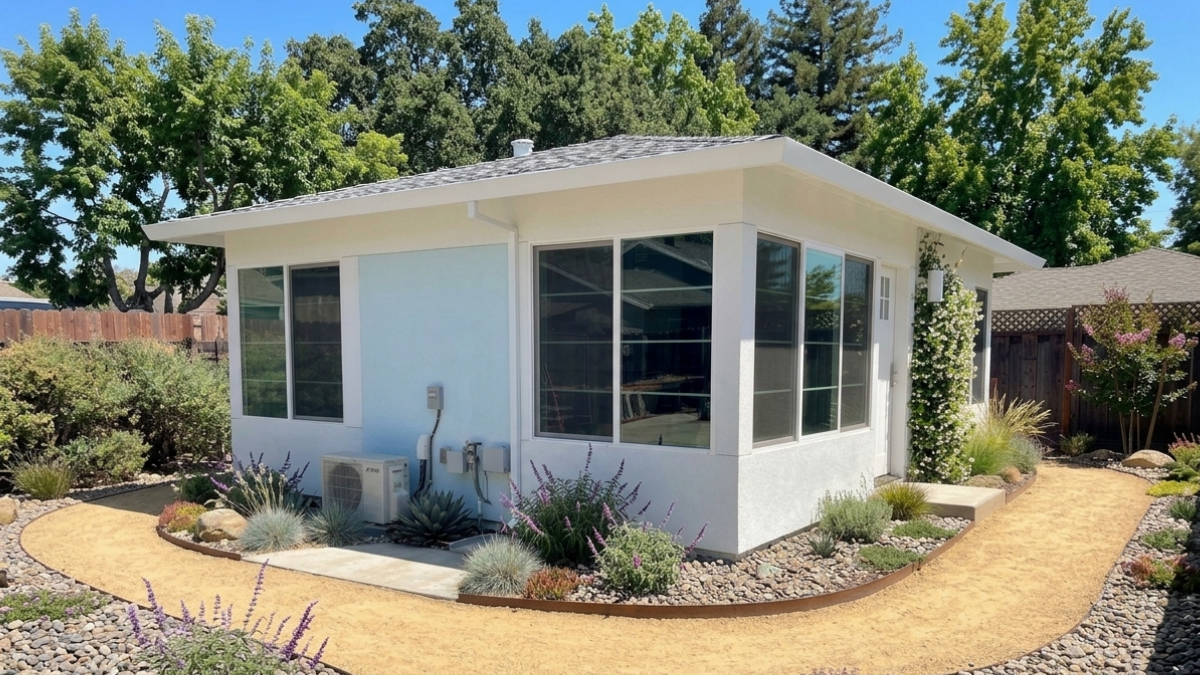
Yes, you can build an ADU in Boulder Creek. Boulder Creek is unincorporated, so Santa Cruz County rules apply: a detached ADU can be up to 850 square feet with one bedroom or 1,000 square feet with two or more, and up to 1,200 square feet on lots of an acre or more, set 4 feet from the side and rear property lines.
Enter your address to find your property, explore your lot and view the plans that may fit it.
Boulder Creek has no city government. Santa Cruz County's Community Development and Infrastructure department reviews ADUs here. Most need only a building permit.
Boulder Creek is a mountain town in the San Lorenzo Valley. Nearly every home is on a septic system, and the system often has to be upgraded before a second home is approved. Steep slopes, creeks, narrow roads and fire safety rules also shape what can be built. The area is still rebuilding from the 2020 CZU fire, so ask the county how rebuild rules apply to your lot.
A single-family lot can have up to four accessory units, though septic capacity usually limits this.
How big can an ADU be in Boulder Creek? On lots under an acre, up to 850 sq ft with one bedroom or less, or 1,000 sq ft with two or more. On lots of an acre or more, up to 1,200 sq ft.
How tall? In rural areas like Boulder Creek, a detached ADU follows the zone's height limit, usually 28 ft.
Setbacks? 4 ft from the side and rear property lines. Creek and slope setbacks can be larger.
Parking? One space for a new ADU unless an exemption applies. None for conversions or Junior ADUs.
You submit a building permit application through the county's online plan review system. Environmental Health reviews the septic system, and the local fire agency reviews access and water supply.
State law gives the county 60 days to approve or deny a complete ADU application. Septic, geologic and fire reviews add time.
Any Boulder Creek lot where homes are allowed can have an ADU, as long as a legal home exists or is proposed.
ADU regulations are constantly evolving and may vary by city, county, or even neighborhood. Before starting your project, it’s always best to consult with a trained professional or certified ADU Specialist to ensure your plans align with current local requirements.
ADU rules change often. This page is a general guide to help you get a sense of what may be possible where you live. It is not legal, zoning or permitting advice, it is no substitute for working with a qualified ADU professional, and it is not a promise that any project will be approved. We update these summaries as often as we can, but your city or county has the final say, and its current code always controls. Before you design, budget or build, confirm the requirements for your property with your local planning and building department.