.png)


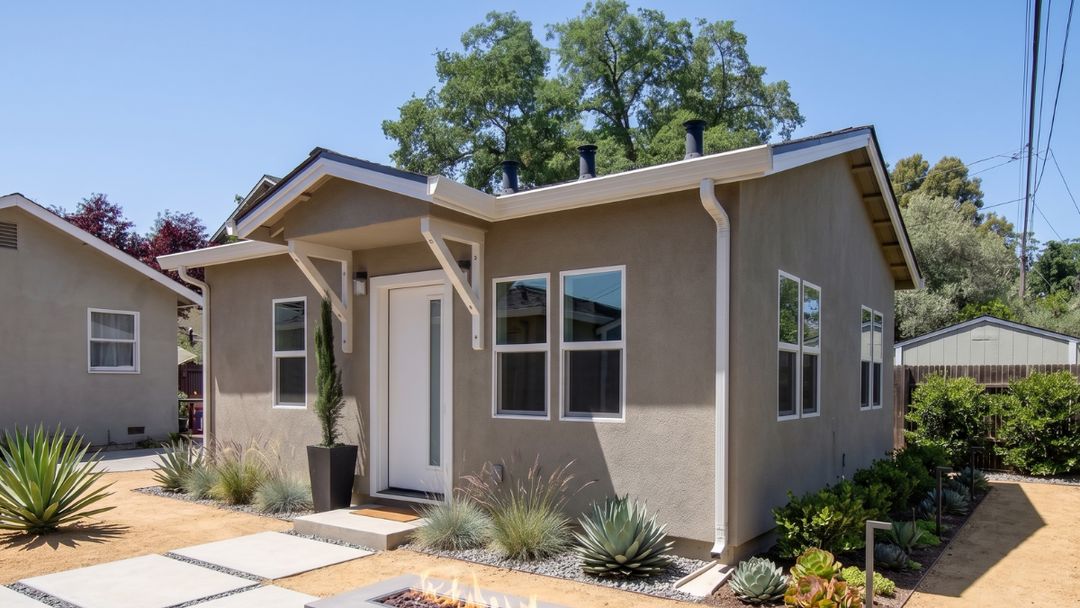
In Beverly Hills, it is natural to think about any major property improvement in terms of value. Homeowners want to know whether an addition will strengthen the property, appeal to a future buyer, and justify the amount invested in it.
Those are important questions, but they are not the only ones worth asking.
A Beverly Hills ADU can increase the usefulness and long term potential of a property well before the home is ever listed for sale. It can give an aging parent a private home nearby, help an adult child remain close to family, accommodate extended visits, create rental income, or provide a comfortable place for the homeowners themselves to live later in life.
Resale value matters. The better goal, however, is to create a home that delivers value every year you own it.
That requires more than adding square footage. It requires thoughtful design, quality construction, and a clear understanding of how the ADU may serve both the property and the family over several decades.
Resale Value Is Only One Kind of Return
When an ADU is discussed only as a resale investment, most of the attention goes to the eventual transaction.
How much more could the property be worth?
Will buyers consider the ADU an advantage?
Could the investment be recovered when the property is sold?
Those questions are reasonable, particularly in a market where the quality and functionality of every improvement can influence how a property is perceived. Still, a well planned ADU begins creating value long before a future buyer enters the picture.
Consider what the home could make possible in the meantime:
- A parent can live nearby without moving into a spare bedroom.
- An adult child can establish an independent household while remaining close to family.
- Visiting relatives can stay comfortably for several weeks or months.
- A caregiver can live on the property when additional support becomes necessary.
- The ADU can produce long term rental income.
- Homeowners can eventually downsize without leaving their property or neighbourhood.
- The main residence can serve a different generation while the family retains the property.
The return is not limited to the amount added to a future sale price. It can also appear as time together, care made easier, housing costs avoided, rental income earned, and choices preserved.
The First Occupant May Be the Least Important Design Decision
Homeowners often begin an ADU project with one person in mind.
Perhaps a parent is ready to move closer. An adult child needs a more stable housing option. The family wants a private place for guests. There may already be a prospective tenant.
Designing for that first occupant makes sense, but designing only for that occupant can limit the ADU’s long term usefulness.
A parent who is independent today may need accessible circulation later. An adult child’s home could eventually become a rental. A guest house may one day accommodate a caregiver or become the homeowners’ primary residence. Even when the initial use is clear, the future rarely remains fixed.
The more valuable approach is to design a complete home that can change roles without requiring major reconstruction.
That may include:
- A bedroom that accommodates more than the smallest possible furniture
- A bathroom planned with future mobility in mind
- Comfortable entrances with minimal thresholds
- Useful storage for long term occupants
- A kitchen suitable for everyday living
- Privacy from the main residence
- Defined outdoor space
- Durable materials that can withstand changing occupants
- Heating, cooling, lighting, and insulation expected in a permanent home
These decisions may not produce the largest possible floor plan, but they can produce a more adaptable and valuable one.
Family Integrity Planning Turns Space Into a Long Term Strategy
Acton ADU describes this kind of preparation as Family Integrity Planning.
The idea began with a problem many California families recognize. Housing costs make it difficult for younger generations to remain in the communities where they grew up. Aging parents may need more support but do not want to lose their independence. Homeowners have valuable property, yet the home may not be configured to support the family as its needs change.
An ADU can help solve those problems before they become emergencies.
Family Integrity Planning means using the property to keep generations close, care for the people you love, and create lasting value in the place the family already calls home. The ADU is not simply an additional building. It becomes part of a wider plan for housing, care, independence, and wealth across generations.
For a Beverly Hills homeowner, this may mean creating a private residence where a parent can live comfortably rather than searching for housing elsewhere. It may mean helping an adult child remain nearby without giving up the boundaries that allow both households to live independently.
The financial value of the property is protected, but so is something harder to measure: the family’s ability to remain connected without asking anyone to give up the privacy and dignity of having a home of their own.
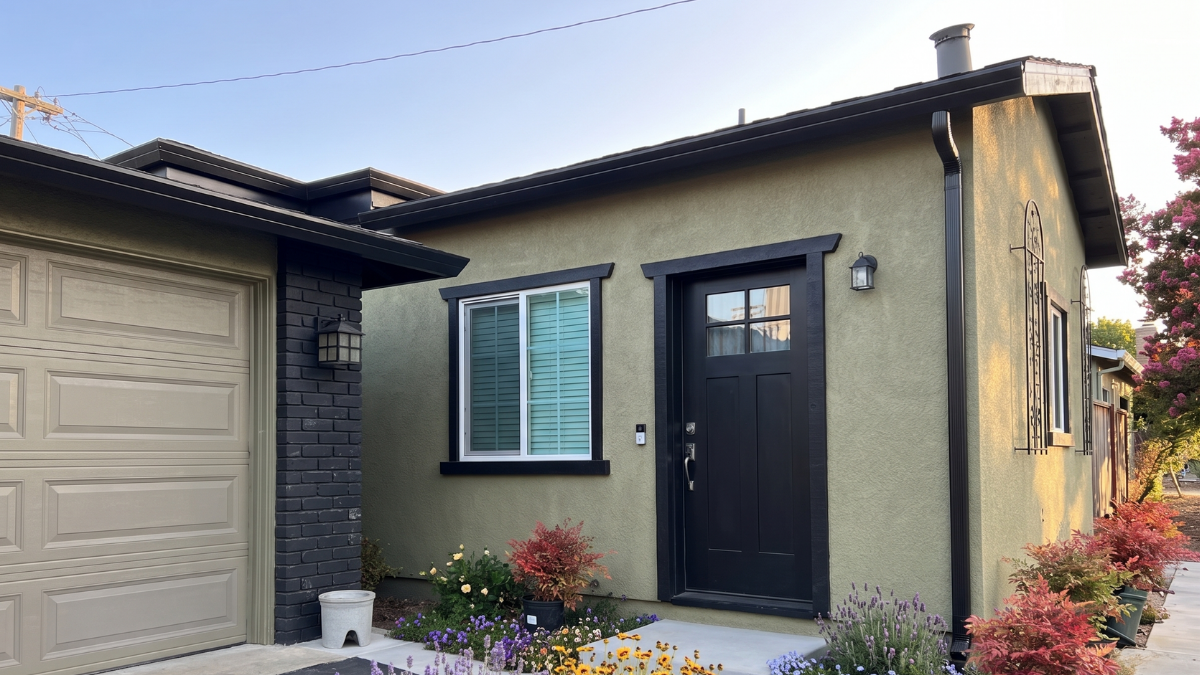
What More Than Resale Value Looks Like
A premium ADU can contribute to the property in several ways at once.
The strongest ADUs do not deliver only one of these outcomes. They are designed so the same space can continue producing different forms of value as the family changes.
A Beverly Hills ADU Must Feel Like Part of the Property
The City of Beverly Hills defines an ADU as a complete independent residence on the same property as a single family home or multifamily building. The unit cannot be sold separately from the main residence, although it may be rented for periods of at least 31 days. This makes the quality and integration of the ADU especially important because it remains part of the larger property rather than functioning as a separately marketable home.
A new ADU should therefore be considered in relation to the entire property.
How will it affect the view from the main residence?
Will it preserve the landscaping and outdoor areas the family uses most?
Can its occupants enter without crossing through a private entertaining space?
Will the architecture complement the main home?
Does the building improve the way the property functions, or does it simply occupy the available area?
These questions are not about making the ADU disappear. A premium home should have its own architectural character, warmth, and sense of arrival. The goal is to create a building that looks intentional within the property rather than secondary to it.
That may involve carrying certain materials, roof forms, proportions, or visual details from the primary residence into the ADU. It may also involve introducing a complementary design that feels more contemporary while still respecting the property’s established architecture.
The two homes do not need to be identical. They need to look as though they belong together.
Privacy Adds Value for Both Households
An ADU can bring family members closer while still giving everyone more personal space.
That balance is important. A parent may appreciate having help nearby but may not want the main house looking directly into the living room. An adult child may want to share meals with family while still welcoming friends through a private entrance. Homeowners may want easy access to the ADU without feeling that their backyard has become a common hallway.
Privacy works best when it is planned into the site and floor plan rather than added later through taller fences.
Good planning may use:
- Separate approaches to the two homes
- Windows positioned away from direct sightlines
- Landscaping that creates definition without making the ADU feel enclosed
- Private patios oriented in different directions
- Thoughtful placement of bedrooms and living areas
- Acoustic separation around active rooms
- Exterior lighting that does not shine into the other residence
These details support independence, but they also improve the long term flexibility of the ADU. A private residence can work comfortably for a family member today and a tenant later without forcing the homeowners to redesign the relationship between the two buildings.
Quality Is Part of the Financial Strategy
Two ADUs with the same number of bedrooms and similar square footage may not add the same value.
One may have strong natural light, comfortable room proportions, useful storage, durable finishes, and architecture that complements the property. The other may technically provide the required rooms but feel more like a utility structure than a home.
That distinction matters to the people who live there, prospective tenants, future buyers, and appraisers evaluating the contribution of the improvement.
Acton’s approach is based on a simple principle: quality is not separate from return. Better design and construction can influence rental appeal, maintenance needs, comfort, longevity, and the value the ADU contributes to the property. The investment should be considered through day one equity, long term wealth creation, and possible monthly cash flow rather than rent alone.
This does not mean spending more simply for the sake of luxury. It means directing the budget toward the qualities that help the home perform better over time.
Those may include:
- A layout designed around real furniture and daily routines
- Materials selected for durability rather than photographs
- Reliable waterproofing and building systems
- Comfortable heating and cooling
- Appropriate insulation and sound control
- Doors and windows that perform well
- Exterior details that suit the main residence
- Construction decisions that reduce future maintenance
These elements may be less visible than a decorative finish, but they determine whether the ADU continues to feel like a premium home after the initial excitement of the project has passed.
More Square Footage Does Not Always Create More Value
It is tempting to treat maximum size as the objective. If the property and regulations allow a certain amount of space, building every available square foot can appear to offer the greatest return.
The most valuable ADU, however, is not automatically the largest one.
Additional space may come at the expense of a garden, pool area, important sightline, or the sense of separation between the two homes. An oversized ADU may also introduce rooms that add construction cost without improving daily life.
A more disciplined design asks what the occupants actually need.
Could a well arranged one bedroom home serve the family better than an awkward two bedroom plan? Would a slightly smaller footprint preserve an outdoor area that makes both residences more enjoyable? Could improved storage and circulation make the interior feel more generous without increasing its size?
The objective should be to create enough space for a complete and comfortable home while protecting the value of everything around it.
In Beverly Hills, where the relationship between architecture, landscaping, privacy, and outdoor living can be central to the character of a property, that balance deserves careful attention.
Design for Day One and Year Fifteen
A valuable ADU should make sense when the first occupant moves in, but it should also remain useful as circumstances evolve.
A simple way to test the design is to consider several possible stages.
Day one
Who will live there first, and what will make the home comfortable for that person?
Year five
Could the occupant’s mobility, work, family, or privacy needs change?
Year fifteen
Could the ADU become a rental, a residence for another family member, or a downsizing option for the homeowners?
Year thirty
Will the construction, layout, and architecture still contribute positively to the property?
This does not mean trying to anticipate every possibility. It means favouring choices that preserve options instead of eliminating them.
A narrow doorway may save a small amount during construction but make future accessibility more difficult. Minimal storage may look acceptable in an empty plan but become frustrating for a long term occupant. Highly specialized rooms may work for one use while limiting the next.
A versatile home does not need to feel generic. It needs to be carefully designed around the parts of residential life that remain valuable regardless of who moves in next.
The Process Also Needs to Add Value
The finished ADU is only part of the homeowner’s experience. The planning and construction process can either protect the investment or expose it to unnecessary uncertainty.
Site conditions often influence cost as much as the building itself. Utility routes, electrical capacity, grading, access, foundations, trees, drainage, and construction logistics can vary significantly from one property to another.
This is why selecting a floor plan should not be the first and only step.
The property needs to be studied before reliable recommendations are made. Homeowners should understand what the site requires, how those requirements affect the budget, and why a particular design approach has been proposed.
Acton’s value proposition is built around three connected priorities:
- Certainty throughout the process
- Quality in the finished product
- A home built to perform for decades
The purpose is not to compete for the lowest initial number. It is to reduce surprises, understand the property before making promises, and design around how the space will actually be used.
A process that protects the budget, schedule, and homeowner’s trust is itself part of the return.
Build a Beverly Hills ADU That Earns Its Place
A Beverly Hills ADU should contribute to the property’s resale value, but that should be only the beginning.
It should create a home where someone can live with privacy and dignity. It should give the family more ways to care for one another. It should provide options when housing needs, finances, or family responsibilities change. It should be built well enough to remain an asset rather than becoming a future renovation project.
Most importantly, it should earn its place on the property every day, not only when the property is eventually sold.
Acton ADU designs and builds premium homes for homeowners who value certainty, quality, and long term performance. We begin by understanding the property and the family’s goals, then develop a solution around how the home will be used now and how it may need to perform years from now.
We are not just building an ADU. We are building a home that needs to perform for decades.
The result should help your family live better, create new income opportunities, and grow the lasting value of the property. It should also be a home you are proud to share with the people you love and proud to have built.