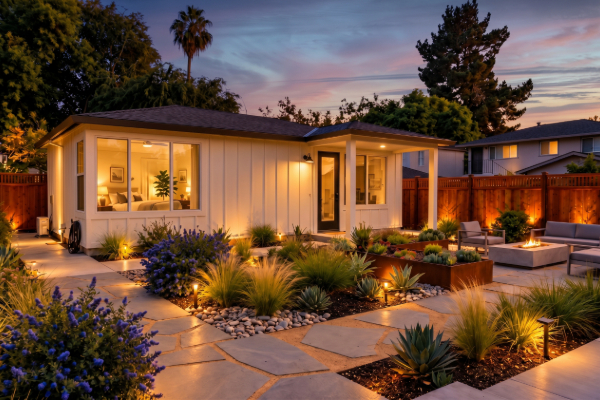
Maximizing Property Value with an ADU in Palo Alto and Silicon Valley
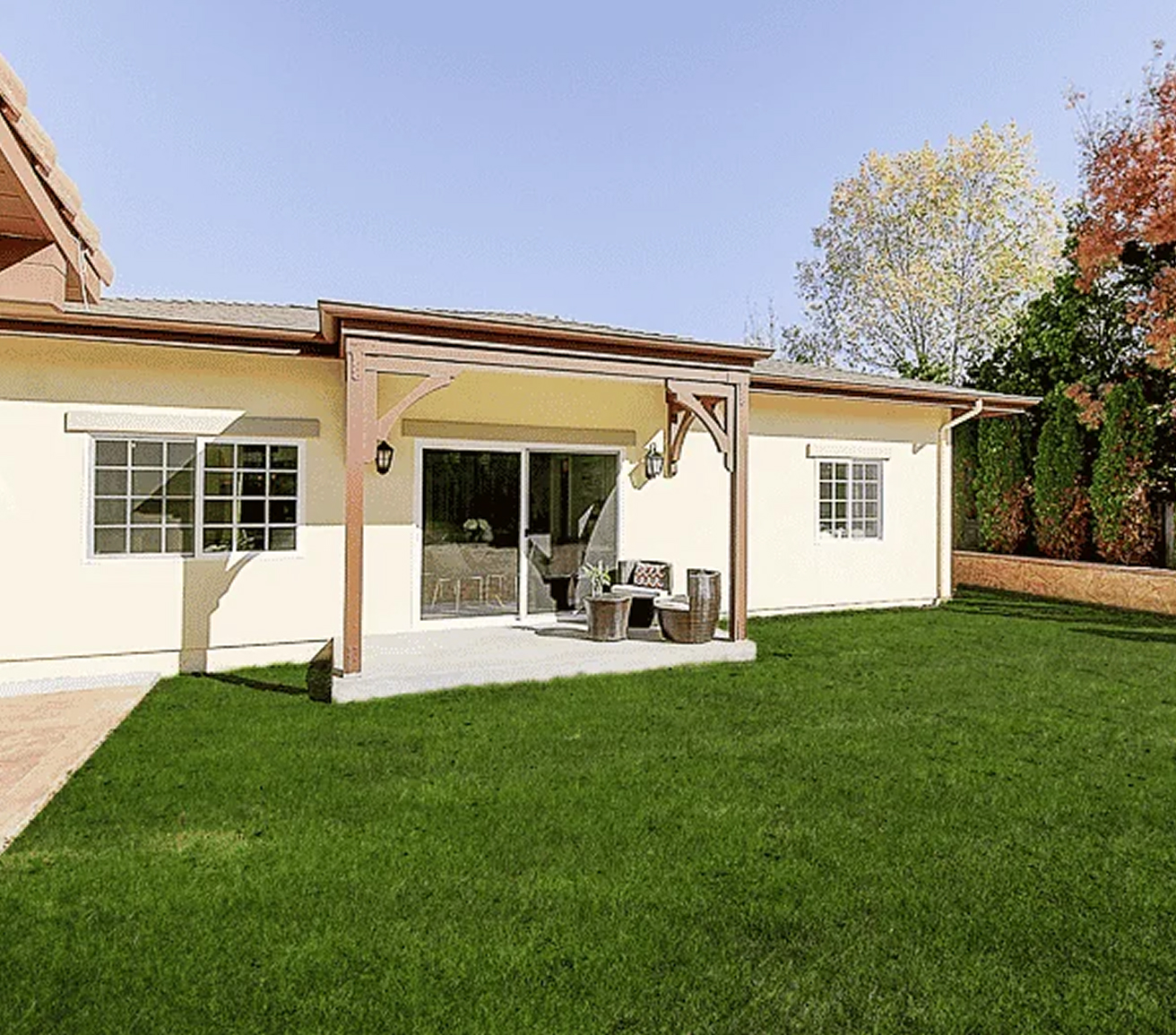
The Growing ADU Movement in Silicon Valley
How to add property value with an ADU in Palo Alto starts with a simple idea: use the land you already own better. How well that works depends on your site, your city's rules, and the quality of what you build. A well-designed, permitted, site-built backyard home tends to add lasting equity, and it can serve your family at every stage of life.
Silicon Valley has high demand for homes and very little room to build new ones. Families who have lived here for decades are feeling the pinch. Aging parents need care close by, and adult children need a place to land. An accessory dwelling unit (ADU), a small, self-contained home on your lot, lets you add space without leaving the neighborhood you love.
California law has also made ADUs easier to build than they used to be. State rules have limited how much cities can stand in the way, and more homeowners now ask whether an ADU fits their property. Acton ADU brings more than 35 years of residential construction experience to that question. The rules are friendlier, but every lot and every city still has its own details. A good plan starts with the property itself.
Below, we look at how to add value in Palo Alto, what site-built construction means in Santa Clara, and whether an ADU is worth it in Silicon Valley. It also covers what appraisers look for. Everything here is qualitative on purpose. Actual numbers depend on your lot, your design, and the market on the day you appraise. Rules and fees cited below are as of 2025, and you should verify them with your city before you plan.
Strategies to Add and Measure Property Value with a Palo Alto ADU
How much value does an ADU add to a home in Palo Alto? Honestly, that comes down to size, quality, and how the appraiser sees the unit. Palo Alto is a premium market with a high price per square foot. A well-built ADU often captures some of that value, though appraisers use methods that differ somewhat from those used for a main home. A good local appraiser and a clear record of permits and finishes help your case.
Here are the choices that tend to matter most in Palo Alto:
- Design that fits the main home. An ADU that looks like part of the property, with matching rooflines, siding, and window style, feels like a natural extension. A box in the backyard does not.
- A right-sized floor plan. Many Palo Alto homeowners look at units in the 500 to 800 square foot range. That size can hold a real kitchen, a full bathroom, and a comfortable bedroom without crowding the yard.
- Privacy by design. Thoughtful window placement and a separate entry make the ADU feel independent for the person who lives there and for your own household.
- Quality finishes. Good windows, durable flooring, and solid cabinetry help the unit hold up and help it show well.
- Site-built craftsmanship. A home built to residential code, inspected like any other, performs and ages like a real home.
Two ADUs of the same size are not worth the same. The difference comes from layout, light, materials, and how well the details were done. Over time, a strong build can cover its construction cost and may exceed it, but that is not a promise. It is why we encourage homeowners to think about year one and year fifteen. Family today, adult children later, then perhaps a rental or a place to downsize into.
If you want to see how pre-designed options work on a Palo Alto lot, you can explore our Build Ready ADU plans or our Palo Alto service area page.
The Impact of Site-Built ADUs on Santa Clara Home Values
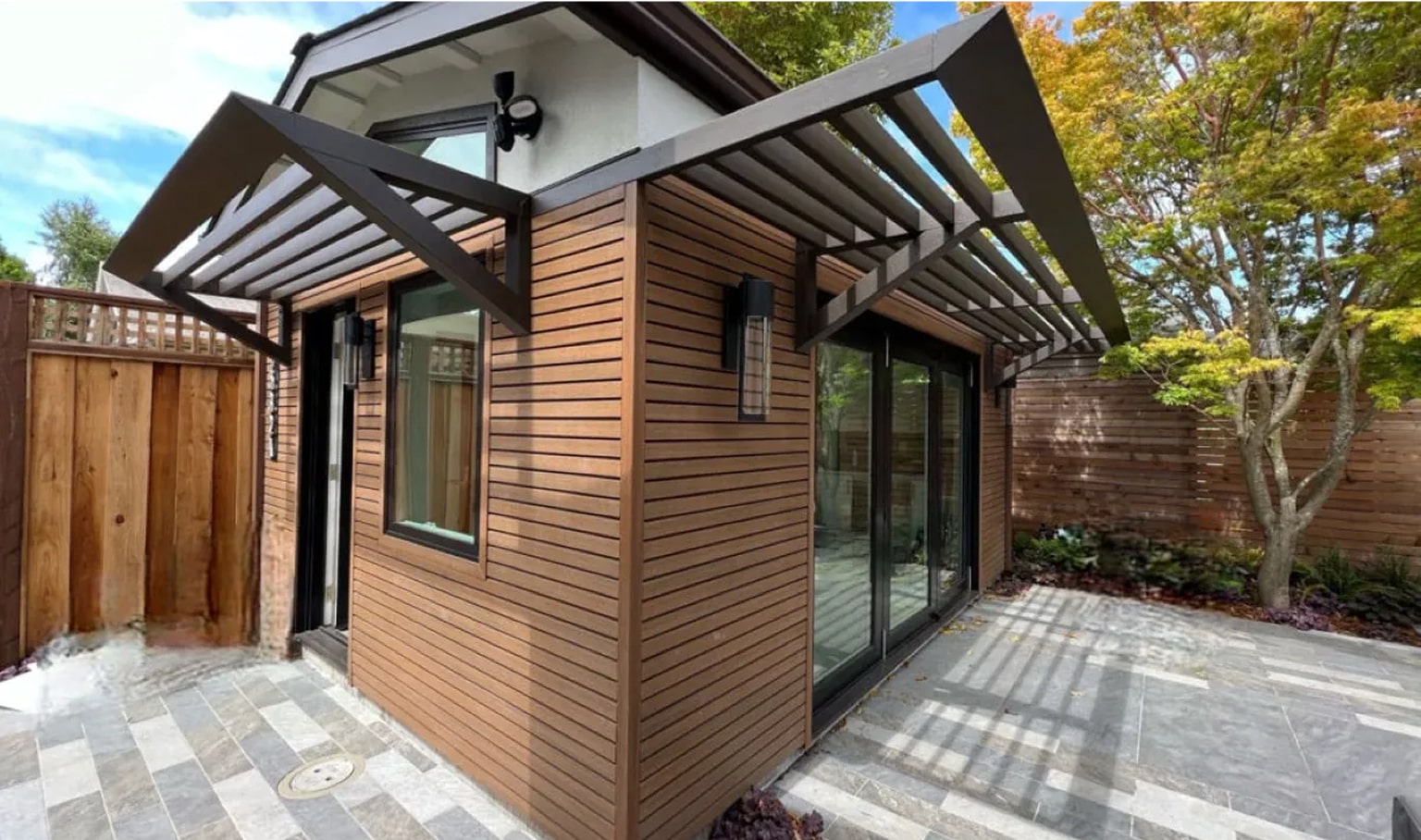
Homeowners also ask how much value a site-built ADU adds to a home in Santa Clara. Building on site is one of the strongest things you can do to support value. A site-built ADU is constructed from the ground up on your property, under local permits and inspections. It is not a prefabricated or factory-built unit shipped in one piece.
That matters because appraisers and buyers tend to treat a permanent, code-built home differently than a unit that is more portable. A site-built ADU becomes part of the property's long-term equity. It can also be shaped around the actual lot. Santa Clara lots vary in width, slope, and access, and a custom floor plan can make the most of usable space without giving up the yard. Even so, results vary by home and by market, so we avoid promising a premium. Ask a local appraiser how they would treat a unit like yours.
There is also a design benefit. Custom architecture can match the look of the neighborhood, from mid-century ranch homes to newer builds. That visual fit helps the ADU feel like it belongs. If you want a plan shaped to your lot, a Custom ADU is built around your setbacks, utilities, privacy needs, and style.
The table below compares two common paths at a high level.
Construction
- Site-built ADU: Built on your lot to residential code
- Prefabricated or factory-built unit: Assembled elsewhere, then delivered
Design flexibility
- Site-built ADU: High, designed around your lot
- Prefabricated or factory-built unit: Usually limited to set models
Permanence
- Site-built ADU: Permanent part of the property
- Prefabricated or factory-built unit: Varies by unit type
Neighborhood fit
- Site-built ADU: Can match the main home
- Prefabricated or factory-built unit: Depends on available styles
Acton ADU builds site-built homes only. We do not build tiny houses or factory-assembled units.
Understanding the True ROI: Is an ADU Worth It in Silicon Valley?
Is adding an ADU worth it for Silicon Valley homeowners? Usually yes, for those who plan to hold the property for the long term. The return comes from several sources at once, so it helps to count more than rent.
Here is how we suggest thinking about it:
- Day-one equity. A well-designed, permitted ADU adds a real home to your property. That is equity you own and can often borrow against.
- Appreciation. Once built, the ADU grows in value along with the rest of the property over time.
- Cost avoidance. For multigenerational families, housing a parent or an adult child on your lot can reduce the need for separate housing or senior care costs.
- Rental income. Rent can help with monthly costs. We see it as a helpful benefit, not the whole case.
High property prices here make it expensive to buy a second property. Getting more from the lot you already own is often a more practical path. Quality matters here too. Better-built homes tend to attract longer-staying tenants and need fewer repairs.
Taxes are another common question. In California, Proposition 13 generally means that new construction is assessed on its own, so an ADU typically triggers a reassessment of the new addition rather than the whole home. Tax rules vary by situation, so confirm this with your county assessor and a qualified tax professional.
For homeowners who plan to stay, the ADU is a flexible asset. It can serve family now, adult children later, and a rental or downsizing home after that.
Design and Build Considerations for Maximum Appraisal Value
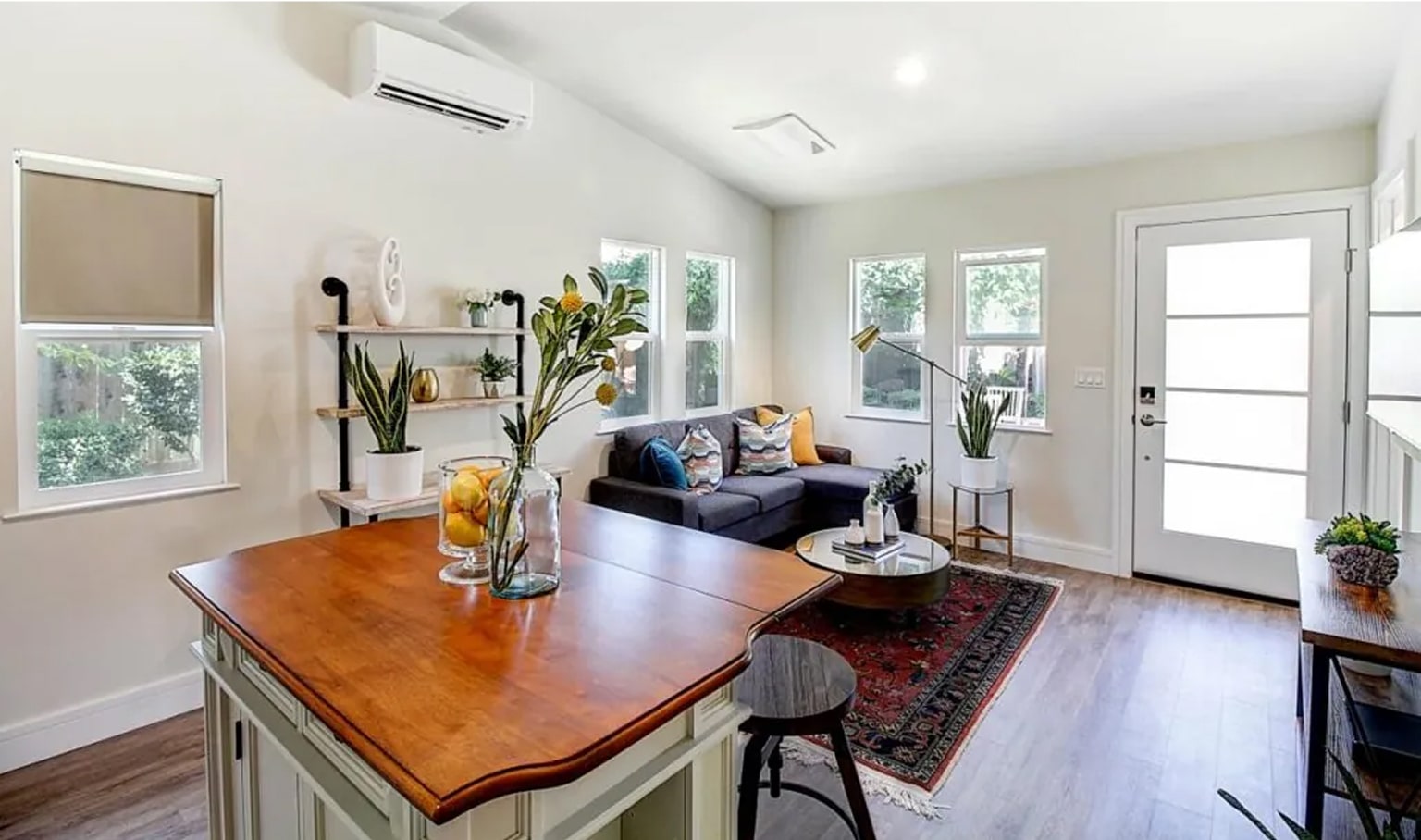
The best way to protect appraisal value is to build the ADU the way an appraiser expects to see a real home. Start with permits. Unpermitted work generally cannot be counted in an official appraisal, and it can create problems when you sell or refinance.
Next, make it a complete dwelling. That means a full kitchen and a full bathroom, so the unit counts as an independent home. Keep the bedroom-to-bathroom balance sensible so it appeals to future buyers and renters. Add efficient systems and modern materials. The 2025 California code cycle applies to permit applications on or after January 1, 2026, and it favors energy-efficient equipment such as heat pumps.
If your site allows it, consider separate utility meters. They make the ADU more useful as a rental. Utility rules differ by provider and city, so check early. Site conditions such as trenching distance, electrical service, foundation type, and trees can change cost and design, so we review those before talking floor plans.
Partnering with Experienced Bay Area ADU Builders
Zoning and permitting in Palo Alto, Santa Clara, and the rest of Silicon Valley differ from city to city. Timelines vary, and some cities are slower than others. When you interview Bay Area ADU builders, look for someone who is candid about those details early.
Here are questions worth asking any builder:
- Do you review my site, utilities, and setbacks before pricing?
- Will I get a written agreement with a property-specific cost?
- How do you handle permits and city communication?
- What is your policy on change orders?
- Who is my single point of contact?
- What warranty do you offer, and how do you honor it?
- Can I see completed projects and talk to past homeowners?
Acton ADU has more than 35 years of residential construction experience and hundreds of completed projects across California. We offer Build Ready ADUs and Custom ADUs, and we manage feasibility, design, permits, and construction. Homeowners choose Acton when they're looking for certainty throughout the process, quality in the finished product, and a home that's built to perform for decades.
Reach out today for a free consultation. You can also check your property to see what may be possible on your lot.
Frequently Asked Questions
How to add property value with an ADU in Palo Alto?
Focus on a permitted, site-built design that matches your main home. Include a full kitchen and bathroom, thoughtful privacy, and quality finishes. Check your city's rules before you start.
How much value does an ADU add to a home in Palo Alto?
That comes down to size, quality, and how an appraiser values the unit. A well-built ADU often supports meaningful equity in a premium market. Ask a local appraiser for a view on your specific property.
How much value does a site-built ADU add to a home in Santa Clara?
A site-built ADU is a permanent, code-built home, which tends to support stronger long-term equity. Custom design can also match the neighborhood and the lot. Results vary by property.
Is adding an ADU worth it for Silicon Valley homeowners?
For homeowners who plan to hold their property, it often is. The case combines equity, appreciation, family flexibility, and possible rental income. Confirm tax and city details with the proper authority.
Hear Why Homeowners Build
The numbers only tell part of the story. On ADU Adventures: Building in Your Backyard, Acton ADU sits down with homeowners, planners, and builders to talk about why families across California are adding a home to their property, and what it means for the neighborhoods and cities around them. If you are weighing how an ADU could add value to your property, start with the show.
Listen to ADU Adventures: https://www.buzzsprout.com/2459996
Acton ADU | CA Lic. #638333 | (408) 539-1908 | info@actonadu.com | ActonADU.com