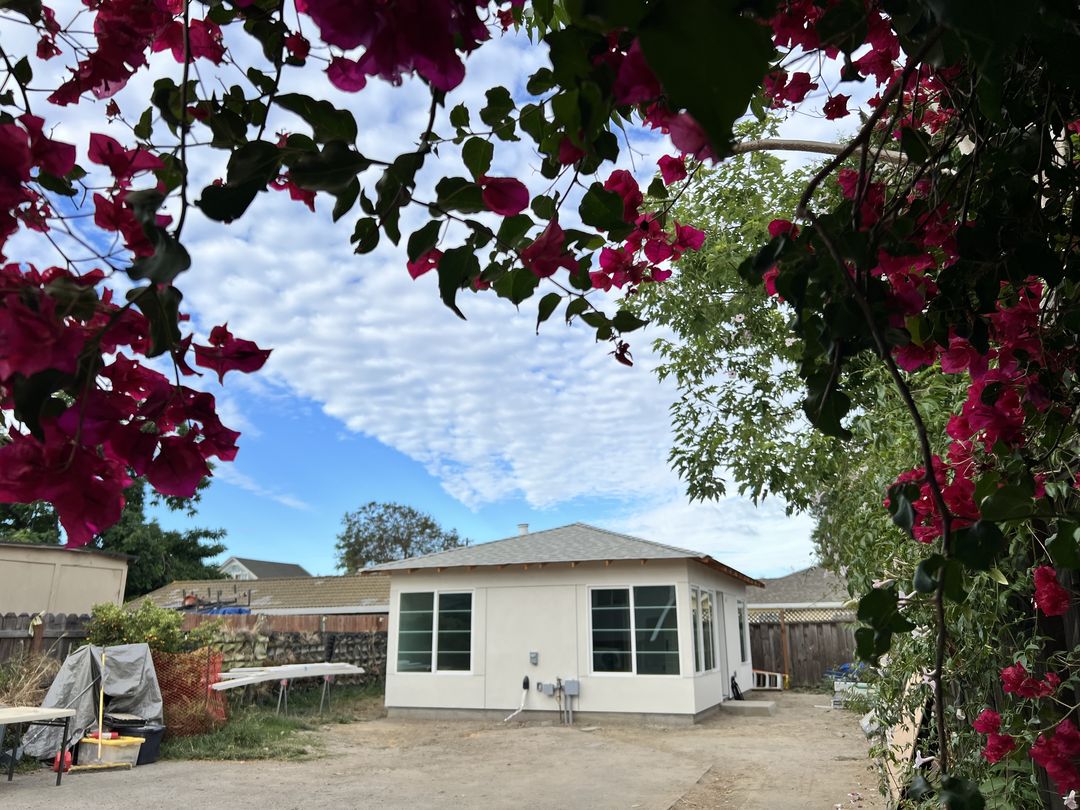
One of the first design questions homeowners ask about an ADU is whether it needs to match the main house.
In Culver City, that question can become especially interesting. Homes here span decades of architectural styles, from Spanish and traditional houses to midcentury properties and highly contemporary remodels. Trying to shrink the architecture of the main house into a backyard footprint can sometimes create more design problems than it solves.
A well designed ADU should belong on the property. That does not mean it needs to imitate everything already there.
Start With the Property Instead of the House
When we begin thinking about an ADU, the existing home is only one part of the picture.
The backyard may have its own opportunities and constraints. There may be mature landscaping worth preserving, a particularly good area for natural light, neighboring windows to consider, or an outdoor space the family does not want to lose.
Those conditions can have a bigger impact on the right ADU design than the shape of the home's roof or the color of its exterior.
This is especially important on Culver City lots where every part of the backyard already has a purpose. An ADU that simply copies the main house may technically fit, but it might miss the chance to make the property work better as a whole.
Matching Can Be Subtle
An ADU and a primary home can feel connected without being identical.
The relationship might come through a shared material, similar window proportions, complementary landscaping, or a color palette that works across both buildings. Even something as simple as repeating a wood tone or exterior detail can create continuity.
That gives homeowners much more freedom with the ADU itself.
A traditional home, for example, can sit comfortably beside an ADU with cleaner contemporary lines when the materials and landscaping create a visual connection between them. The backyard home develops its own identity while still looking intentional.
Smaller Buildings Have Different Design Needs
Architecture does not always scale down neatly.
Features that feel balanced on a larger house can overwhelm a compact ADU. Heavy rooflines, oversized trim, decorative details, and complicated exterior forms all consume visual and sometimes physical space.
An ADU benefits from proportions designed specifically for its size.
That can mean larger windows in carefully chosen locations, simpler roof geometry, built in storage, efficient circulation, and stronger connections to patios or gardens.
The goal is to make a smaller home feel generous rather than to reproduce every architectural feature of the primary residence.
%20(BA-2)%20(O-1)%20(GS)%20Classic%20Elegance%20-%20Kitchen.jpg)
Think About Who Will Actually Use the ADU
The future resident should have a strong influence on the design.
An ADU for aging parents may need easy circulation and a comfortable relationship with the main house. A space for an adult child may benefit from more privacy. A home office or flexible family space may need a completely different layout.
Those needs can also influence how the ADU looks and feels.
If the structure has its own entrance, outdoor seating area, and views into the garden, it begins to feel like a complete home instead of an addition placed in the backyard.
That sense of independence often matters far more to the person living there than whether the exterior trim precisely matches the house twenty feet away.
A Backyard Can Support Two Architectural Personalities
Some of the most interesting properties feel as though they evolved thoughtfully over time.
The original house establishes one part of the story. The ADU becomes another.
That approach can work particularly well in Culver City, where homeowners are already surrounded by an eclectic mix of architecture. A thoughtfully designed backyard home can add another layer without making the property feel disconnected.
What matters is that the buildings respond to one another and to the landscape around them.
Should a Culver City ADU Match the Main House?
Exact matching can work, but it is not always the best design choice. Here are some of the tradeoffs to consider:
For most Culver City homeowners, the strongest approach is to focus on compatibility rather than duplication. The ADU can share materials, colors, proportions, or landscaping cues with the main house while still being designed around its own size, location, and purpose.
Design the ADU the Property Actually Needs
A backyard home is an opportunity to solve something.
It might create room for parents to live nearby, give an adult child a place of their own, add long term flexibility to the property, or simply make better use of space the family already has.
The architecture should support that purpose.
Acton ADU approaches each property individually, looking at the home, lot, future residents, and long term plans before determining what kind of ADU belongs there.
If you are considering an ADU in Culver City, start by exploring what your property can support and what you want the new space to make possible.