When homeowners start planning an accessory dwelling unit in Glendale, they usually focus on the building itself. How many bedrooms will fit? Should it have an open kitchen? Is there enough room for a separate laundry area?
All reasonable questions. But there's another one worth asking before getting too attached to a floor plan.
What will it feel like to live on the property once there are two homes instead of one?
Suddenly, your backyard has two front doors, two households, and potentially two very different daily routines. The outdoor space you've enjoyed for years will need to serve everyone a little differently.
A well-designed Glendale ADU should make the property more useful without making anyone feel crowded. Achieving that balance starts with looking beyond the new structure.
A Bigger ADU Isn't Always a Better ADU
California ADU laws have made it easier for homeowners to add living space, but just because you can build a certain size doesn't mean you should.
In Glendale, qualifying ADUs can reach 1,000 square feet when designed with more than one bedroom. Smaller units may qualify for different development standards, giving homeowners several possibilities to explore.
But imagine two versions of the same backyard.
In the first, a large ADU occupies nearly every available square foot. There's plenty of interior space, but the original home's kitchen windows now look directly into the new living room. The remaining yard feels like a narrow passageway.
In the second, a slightly smaller ADU sits at a carefully considered angle. Both homes have their own outdoor seating areas, natural light reaches the main house, and the occupants can come and go without constantly crossing paths.
Which property would you rather live on?
The answer illustrates why square footage alone is a poor measure of good ADU design.
For Glendale homeowners, particularly those with established gardens, mature trees, and smaller residential lots, preserving the quality of the outdoor space can be every bit as important as maximizing the interior.
Privacy Matters Even When It's All Family
One of the most compelling reasons to build an ADU is to keep family members close.
Parents can enjoy greater independence as they age. Adult children can establish their own households without leaving the community. Grandparents can spend more time with their grandchildren while maintaining a home of their own.
These possibilities are central to family integrity planning, an approach that considers how a property's design can support family relationships over multiple generations.
But closeness works best when everyone has room to breathe.
A parent moving into a backyard ADU may appreciate being nearby without wanting to feel watched whenever they step outside. Similarly, the homeowners in the main residence probably don't want every conversation on their patio to become a shared family event.
A thoughtfully designed ADU respects those boundaries from the beginning.
Separate entrances, comfortable distances between windows, and landscaping that creates natural privacy can make two households feel independent even when they're only steps apart.
The goal is to make spending time together a choice, rather than an unavoidable part of the floor plan.
Five Design Decisions That Make a Glendale ADU Feel More Private
Privacy doesn't require tall walls or completely separate yards. Sometimes the smallest architectural decisions produce the biggest improvements.
Consider these details early in the design process:
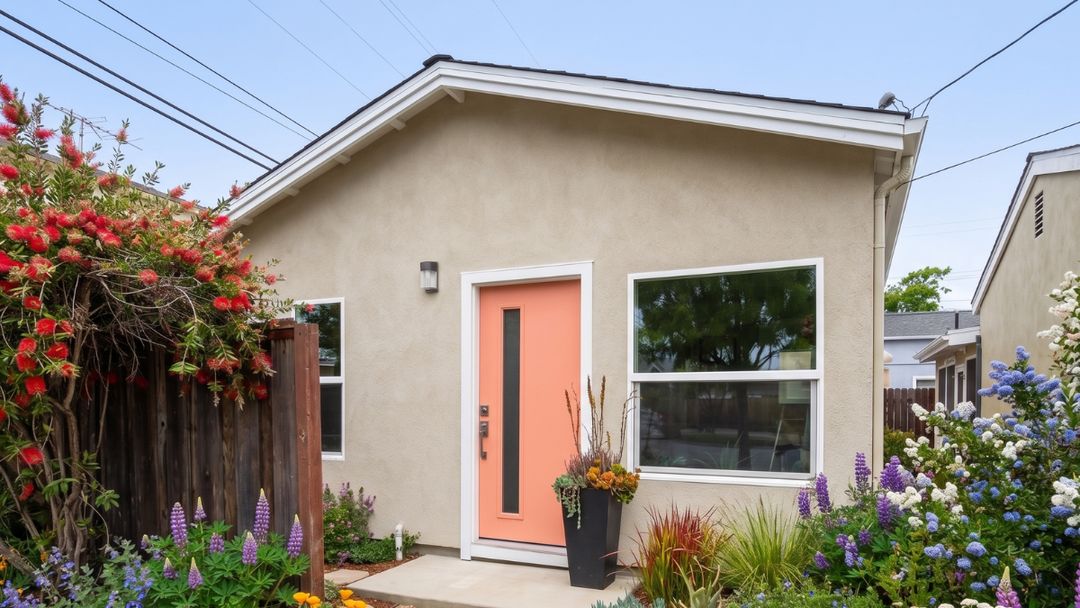
- Position the entrance thoughtfully. An ADU entrance that opens toward a side walkway or private courtyard can help residents come and go without passing directly through the main home's outdoor living area.
- Pay attention to window placement. Large windows bring in beautiful natural light, but placing them directly opposite existing windows can leave both households feeling exposed.
- Create distinct outdoor areas. Even a compact patio or small landscaped seating space gives ADU residents somewhere to enjoy the outdoors independently.
- Use landscaping to create separation. Trees, shrubs, and carefully positioned planters can soften the relationship between the two structures while preserving the character of the backyard.
- Think about sound. Quality insulation, appropriate mechanical equipment placement, and thoughtful room arrangements can reduce noise between households.
These decisions are particularly valuable when an ADU will be occupied by family members. After all, maintaining healthy relationships depends partly on having comfortable personal space.
Glendale Properties Have Their Own Design Challenges
Glendale's residential neighborhoods vary considerably. Some feature relatively level properties with traditional Craftsman or Spanish-style homes, while others extend into the foothills, where slopes and limited access can make construction more complicated.
That variety makes a site-specific approach especially important.
For many qualifying detached ADUs, Glendale generally allows four-foot interior property line setbacks and a height of 16 feet, with certain exceptions. However, the available building area is only one part of the assessment.
The city also has design requirements that may affect new construction, along with additional considerations for historic properties. On some older Glendale homes, preserving important architectural details or limiting the visibility of new construction from the street can influence the final design.
There's another practical detail worth checking early. Glendale Water & Power recommends verifying that an ADU's proposed location doesn't conflict with existing utility easements, even when converting an existing garage.
These are precisely the kinds of issues that should be identified before investing time and money in a design that may need significant revisions.
A comprehensive property evaluation helps establish what's possible, where the ADU should go, and how to make the best use of the available space.
Build for the Next Twenty Years, Not Only the Next Two
There's a good chance the people living in your Glendale ADU twenty years from now won't be the same people who first move in.
Your adult children may eventually purchase homes of their own. A parent may need additional accessibility features. The ADU might later become a rental property, subject to applicable local requirements.
A design that works for only one very specific situation can limit those possibilities.
That's why Acton ADU emphasizes quality construction, adaptable layouts, and long-term value.
Features such as step-free access, durable finishes, generous storage, comfortable bathrooms, and flexible living areas can make an ADU more useful as household needs evolve.
Investing in a high-quality structure also makes sense from a property ownership perspective. A well-designed ADU can increase a home's functionality and may contribute to resale value, although the financial return will depend on construction costs and market conditions.
For families hoping to retain their Glendale property for future generations, creating adaptable living space can be part of a larger plan for keeping the property useful within the family.
The investment should make sense for the people who live there today while leaving opportunities open for tomorrow.
Make Room for Another Home Without Losing What You Love
Building an ADU changes a property permanently. Done thoughtfully, those changes can make everyday life more comfortable, provide housing for loved ones, and create lasting opportunities for the next generation.
But getting there requires more than selecting an attractive floor plan.
With more than 35 years of building experience, Acton ADU helps homeowners evaluate their properties, explore design options, and navigate the process from initial planning through construction.
Whether you're considering a Build Ready ADU or a fully custom design, Acton's approach focuses on quality, thoughtful use of space, and the long-term needs of the household.
For Glendale homeowners, that means creating a new home that feels like a natural addition to the property while preserving the qualities that made the original home special.
Thinking about building a Glendale ADU? Contact Acton ADU to explore your property's possibilities and start designing a backyard home that gives everyone room to live comfortably.