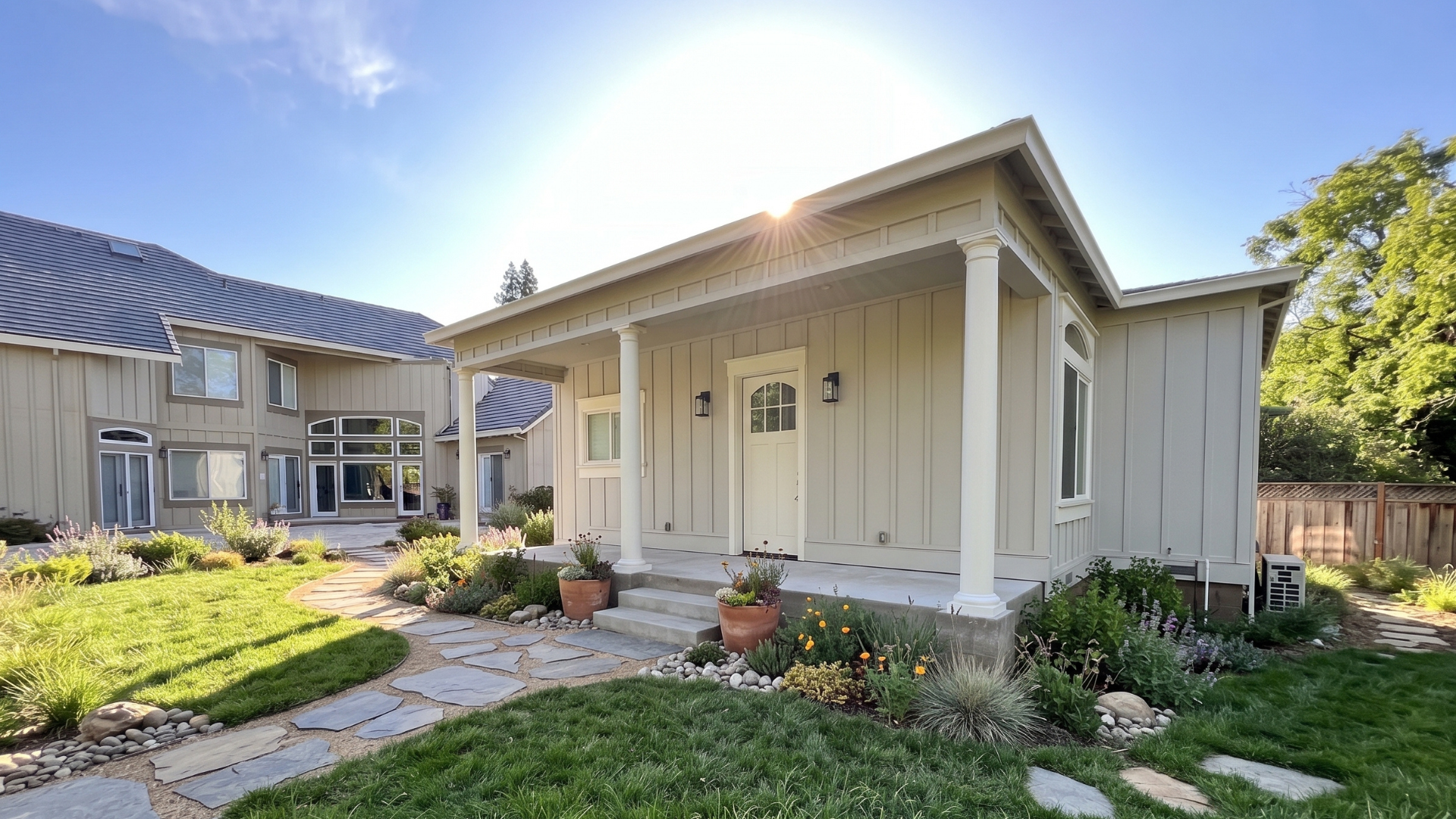
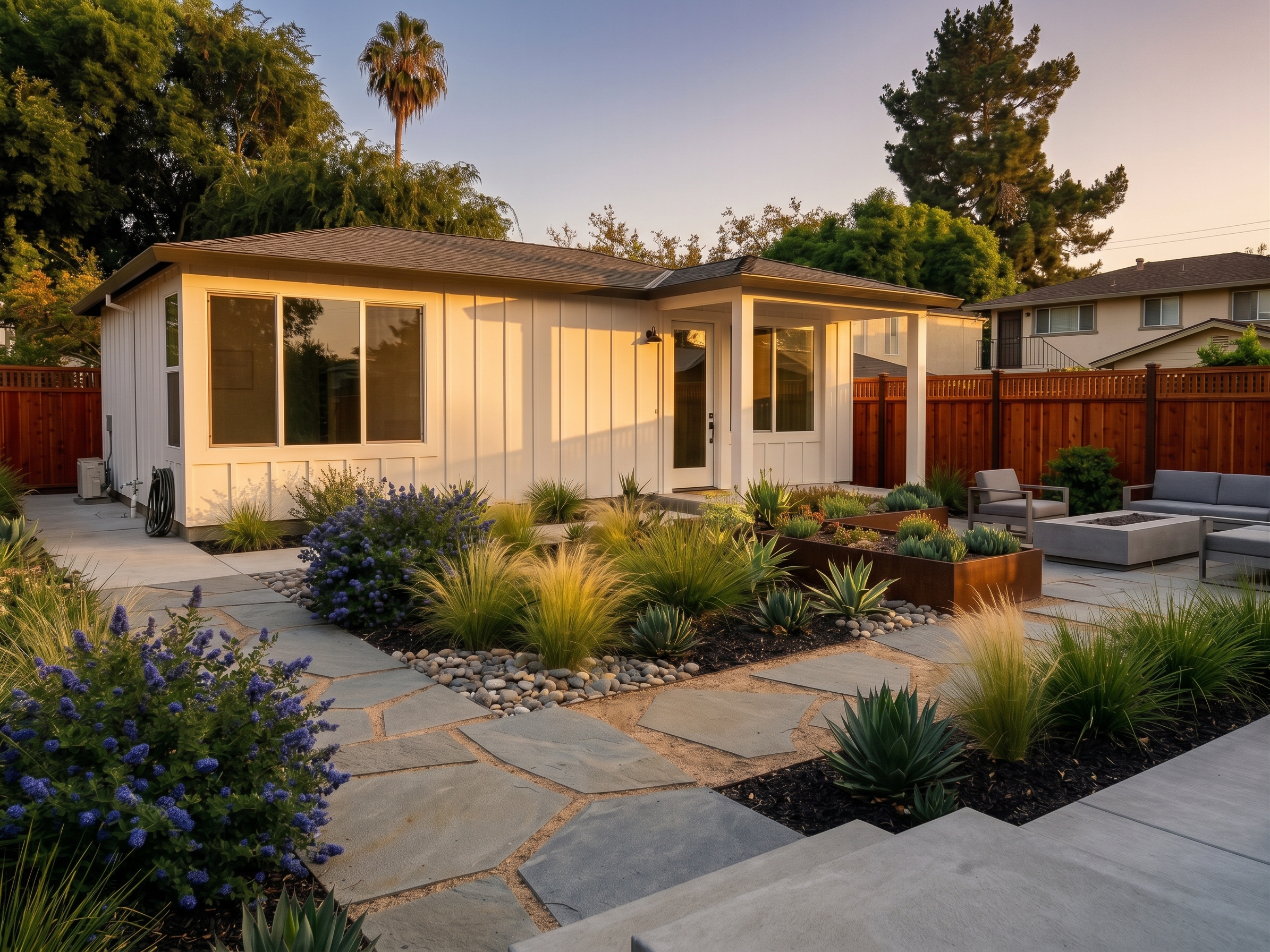
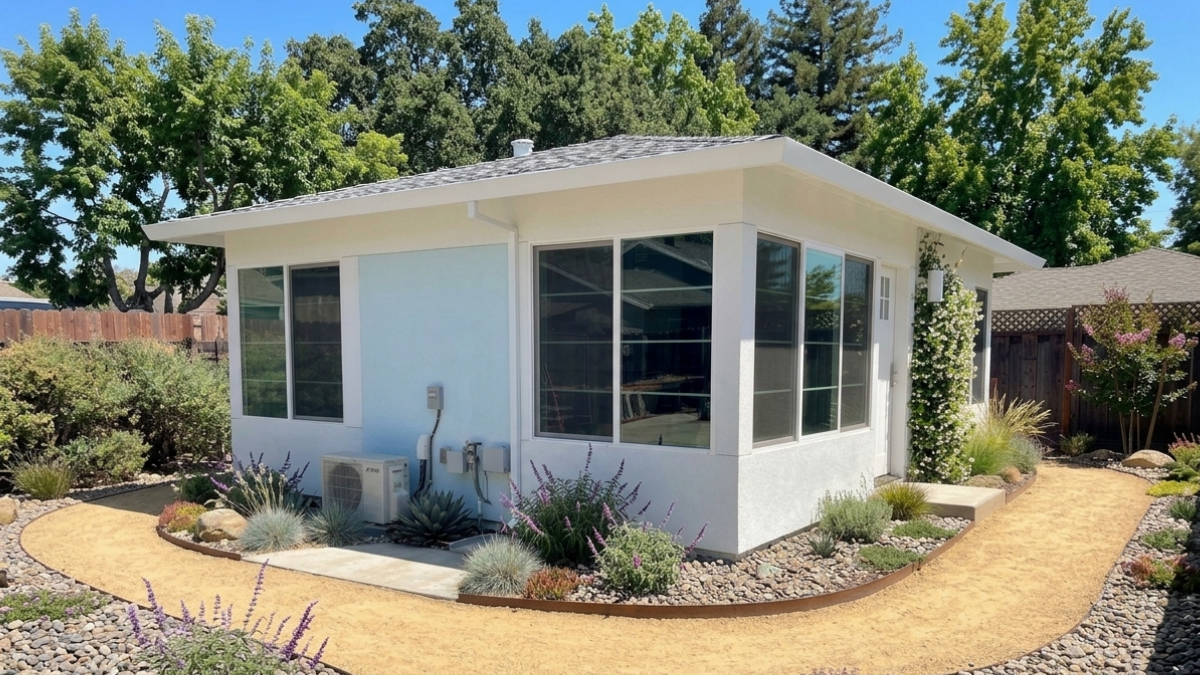
Yes, you can build an ADU in Mill Valley. An ADU can be 850 sq ft with one bedroom or 1,000 sq ft with two, a detached ADU can be 16 ft tall, and side and rear setbacks are 4 ft.
Enter your address to find your property, explore your lot and view the plans that may fit it.
The City of Mill Valley reviews ADU permits. The rules are in Chapter 20.90 of the Mill Valley Municipal Code and are summarized in the city's ADU Handout. Small ADUs (800 sq ft or less and within the height limits) need only a building permit. Larger or taller ones also need an ADU permit from Planning.
A single-family lot can have one ADU and one Junior ADU.
How big can an ADU be in Mill Valley?
850 sq ft for a studio or one-bedroom and 1,000 sq ft for two bedrooms. Internal conversions can be up to 1,200 sq ft. An attached ADU can be 50% of the main house or 800 sq ft, whichever is larger, within those caps.
How tall?
A detached ADU can be 16 ft, or up to 25 ft when built above a detached garage. An attached ADU can be 25 ft or the height limit for the main house, whichever is lower.
Setbacks?
4 ft from the side and rear property lines, and 15 ft from the front.
Parking?
One space per ADU. None is required for conversions, for ADUs that need only a building permit, within half a mile of transit, or in the Historic Overlay District. Garage conversions do not need replacement parking.
An ADU in Mill Valley needs a building permit, and some also need an ADU permit. A typical application includes:
State law gives the city 60 days to approve or deny a complete ADU application. Corrections and resubmittals add time.
ADUs are allowed on lots with an existing or proposed home.
ADU regulations are constantly evolving and may vary by city, county, or even neighborhood. Before starting your project, it’s always best to consult with a trained professional or certified ADU Specialist to ensure your plans align with current local requirements.
ADU rules change often. This page is a general guide to help you get a sense of what may be possible where you live. It is not legal, zoning or permitting advice, it is no substitute for working with a qualified ADU professional, and it is not a promise that any project will be approved. We update these summaries as often as we can, but your city or county has the final say, and its current code always controls. Before you design, budget or build, confirm the requirements for your property with your local planning and building department.