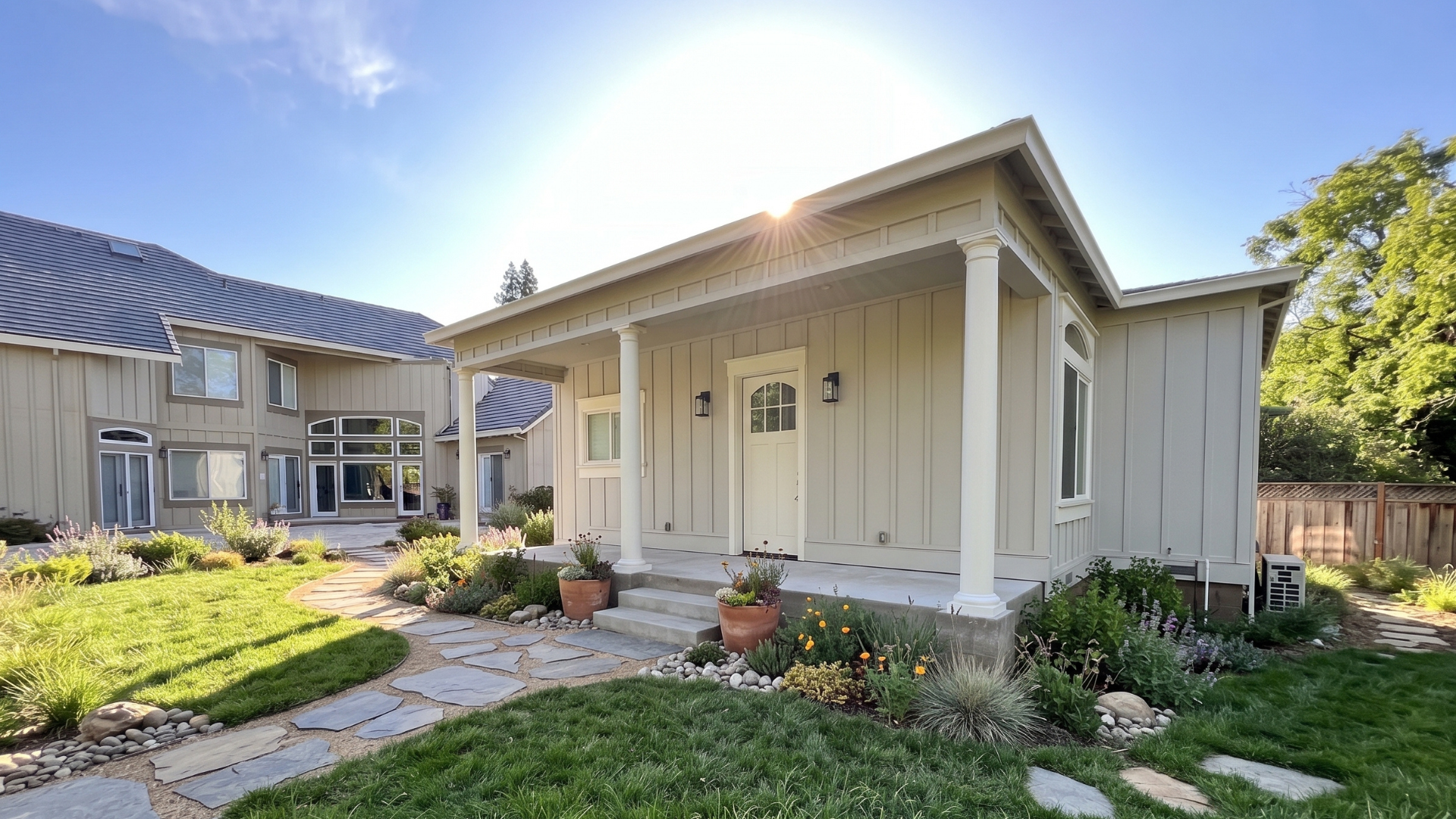
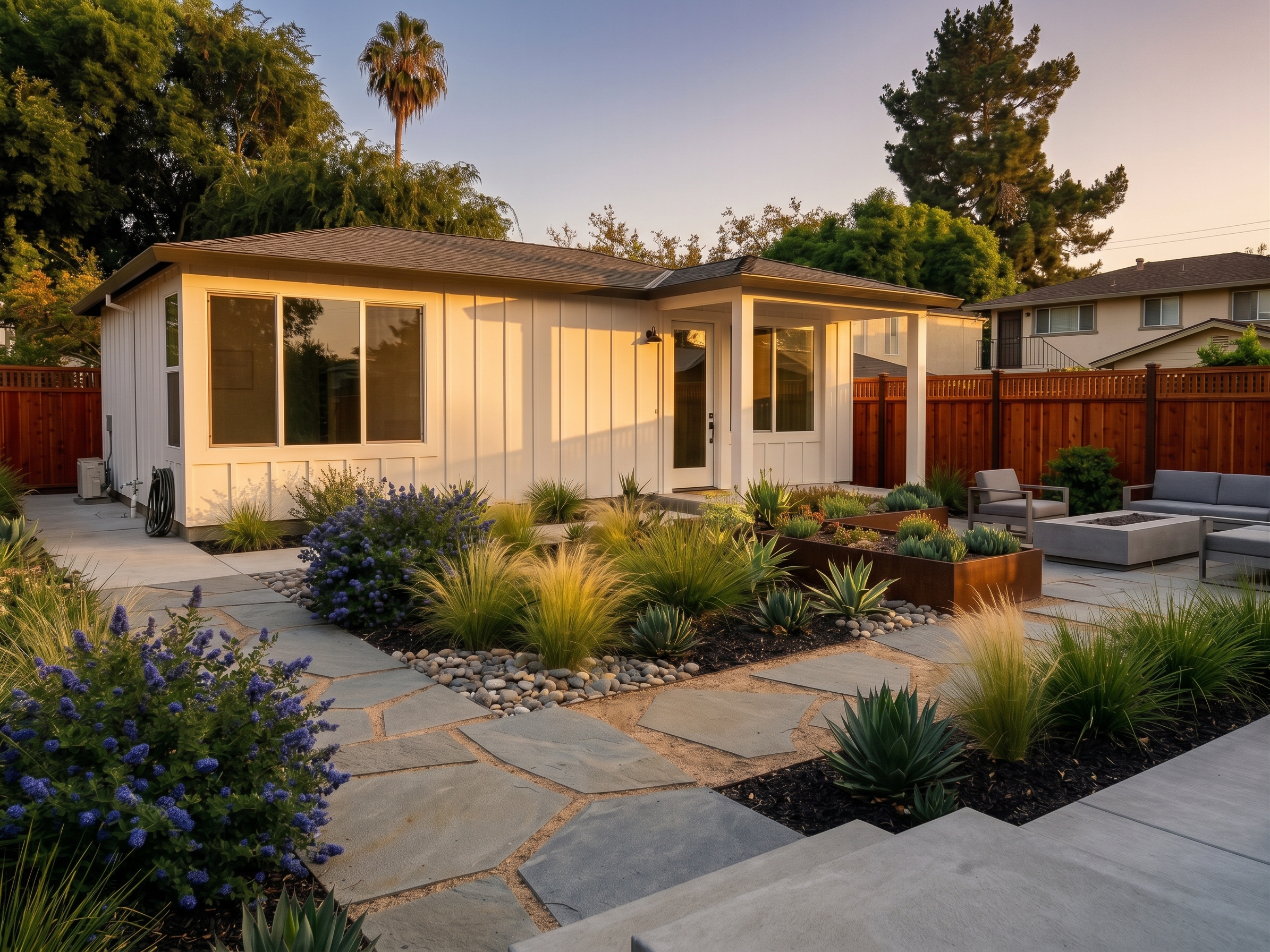
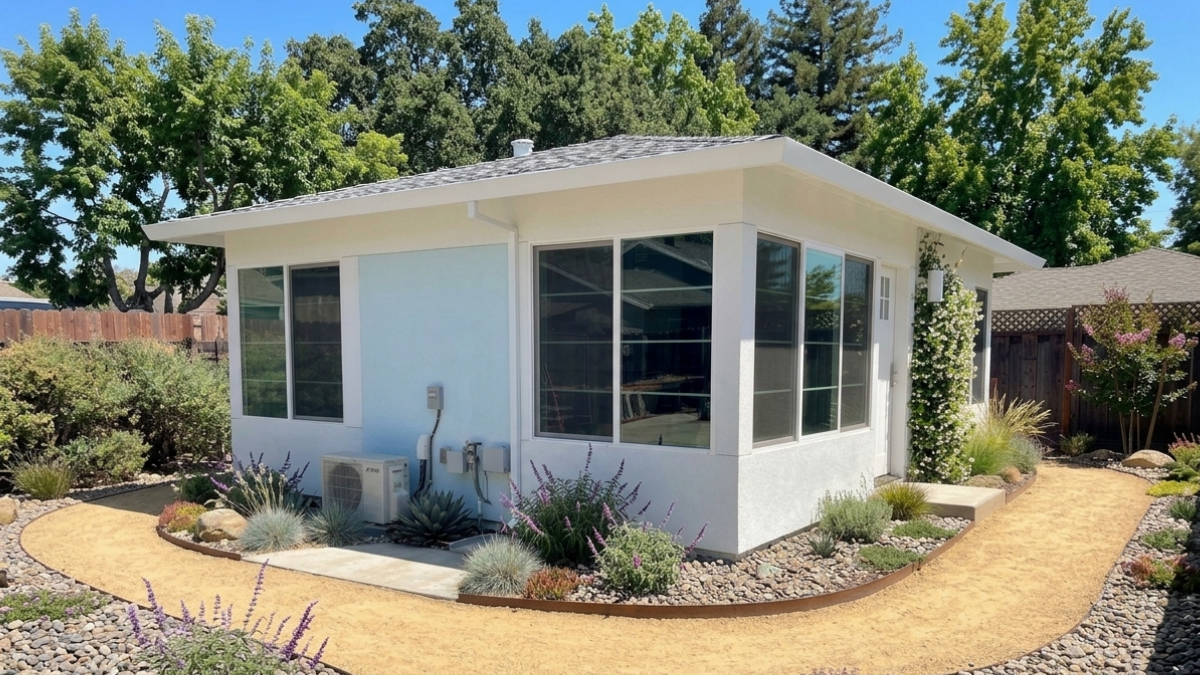
Yes, you can build an ADU in Livermore. An ADU can be 850 sq ft with up to one bedroom, or 1,000 sq ft with more than one, a detached ADU can be 16 ft tall, and side and rear setbacks are 4 ft.
Enter your address to find your property, explore your lot and view the plans that may fit it.
The City of Livermore reviews ADU permits through its Permit Center. ADUs are allowed in all residential zoning districts, and the figures on this page come from the city's ADU Handout. Livermore has pre-approved ADU plans with a faster review and lower permit costs, and takes part in a state rebate program for new ADUs of up to 1,000 sq ft. Cities update their ADU rules often, so confirm current figures with the city.
A single-family lot can have one ADU and one Junior ADU.
How big can an ADU be in Livermore?
850 sq ft with one bedroom or less, or 1,000 sq ft with more than one bedroom. The smallest allowed is 150 sq ft.
How tall?
A detached ADU can be 16 ft, with 2 more feet allowed to match the roof pitch of the house. It can be 18 ft within half a mile of transit or on a multifamily lot. An attached ADU can be 25 ft or the limit for the main house.
Setbacks?
4 ft from the side, rear and street-side property lines. The front setback is 15 ft or what the zone requires. A detached ADU must sit 5 ft from other buildings on the lot.
Parking?
One off-street space for an attached or detached ADU, which can be tandem. State exemptions apply, such as conversions and homes within half a mile of public transit. Parking removed for an ADU does not have to be replaced.
Attached and detached ADUs in Livermore both need a building permit. A typical application includes:
State law gives the city 60 days to approve or deny a complete ADU application. Corrections and resubmittals add time.
ADUs are allowed in all residential zoning districts.
ADU regulations are constantly evolving and may vary by city, county, or even neighborhood. Before starting your project, it’s always best to consult with a trained professional or certified ADU Specialist to ensure your plans align with current local requirements.
ADU rules change often. This page is a general guide to help you get a sense of what may be possible where you live. It is not legal, zoning or permitting advice, it is no substitute for working with a qualified ADU professional, and it is not a promise that any project will be approved. We update these summaries as often as we can, but your city or county has the final say, and its current code always controls. Before you design, budget or build, confirm the requirements for your property with your local planning and building department.