.png)


%20(BA-2)%20(O-1)%20(GS)%20California%20Coastal%20-%20Appliance%20Base.jpg)
Across the Bay Area, more families are rethinking how their homes support multiple generations. Housing costs remain high, adult children often return home after college, and many parents want to stay close to family as they age.
For homeowners who want to keep relatives nearby without crowding a single household, Accessory Dwelling Units (ADUs) have become one of the most practical solutions.
A well-planned ADU allows families to live on the same property while maintaining independence. Instead of sharing kitchens and daily routines, each generation can have its own private living space while remaining close enough to offer support when needed.
For many homeowners, this arrangement solves an immediate housing challenge while also improving the long-term flexibility and value of the property.
Why multigenerational living is becoming more common
Family housing patterns have changed significantly over the past decade. Many households now include parents, adult children, or grandparents living on the same property at different stages of life.
Several factors are driving this shift.
First, housing affordability in the Bay Area makes it difficult for young adults to establish independent households early in their careers. Living temporarily at home can provide the financial stability needed to save for the future.
Second, many aging parents prefer to remain close to family rather than moving into assisted living communities. Proximity allows them to maintain independence while still having support available when needed.
Finally, families increasingly value the ability to share time and responsibilities across generations. Grandparents may help with childcare, while younger family members can assist with errands or household tasks.
Traditional homes rarely accommodate these arrangements comfortably. ADUs provide a way to adapt existing properties to these evolving needs.
How ADUs create independence without separation
The biggest challenge in multigenerational households is maintaining privacy and autonomy.
When several adults share the same kitchen, living room, and daily schedule, small frustrations can quickly accumulate. Even when family relationships are strong, households often benefit from clear boundaries between living spaces.
ADUs address this challenge by creating a separate residence on the same property.
A typical ADU includes its own entrance, kitchen, bathroom, and living area. This allows family members to maintain their own routines and lifestyle while remaining physically close to one another.
The result is a balance between independence and connection. Family members have their own homes, yet support is always nearby when needed.
Planning an ADU that supports long-term flexibility
When families build an ADU for multigenerational living, the most successful projects usually consider how the space may be used years later.
A unit designed for aging parents today may eventually house adult children, serve as a rental property, or become a guest house. Because the structure will likely remain part of the property for decades, flexibility becomes an important design goal.
Layout decisions can influence how adaptable the space will be.
Separate living and sleeping areas often make the unit more comfortable for long-term occupancy. A full kitchen can make the space suitable for future tenants or extended guests. Thoughtful storage and natural light help ensure the unit feels like a real home rather than temporary accommodation.
When these factors are considered early in the design process, the ADU can serve multiple purposes over time.
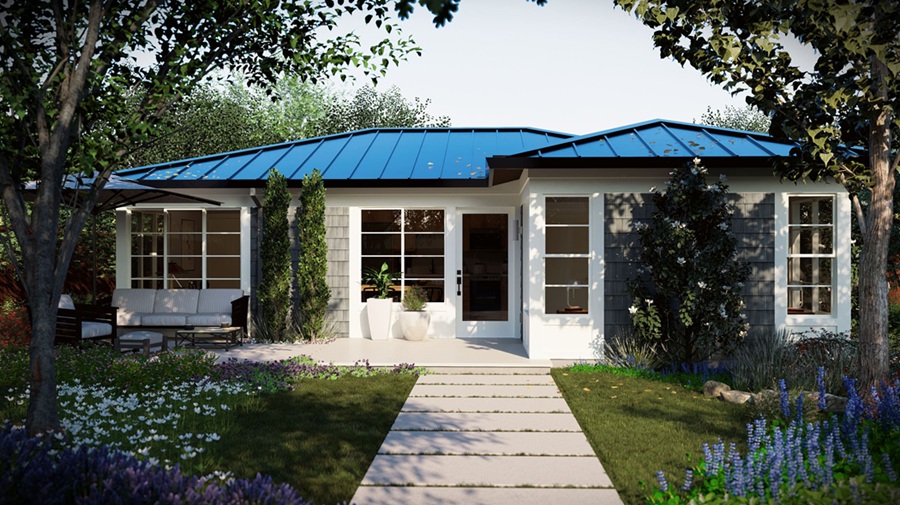
Multigenerational ADUs and long-term property value
Beyond lifestyle benefits, ADUs can also improve how a property performs financially.
Adding a secondary home increases the amount of usable living space on the lot. In many Bay Area markets, properties with flexible housing options are increasingly attractive to future buyers.
The financial value of an ADU often depends on several design choices.
Architectural compatibility with the main home helps maintain the property’s visual appeal. Durable materials and quality construction reduce maintenance costs over time. Efficient layouts make the unit desirable for future occupants.
When these elements come together, the ADU becomes more than an additional structure in the backyard. It becomes a long-term asset that contributes to the overall performance of the property.
For homeowners thinking about the future, this perspective often changes how they approach the project. Instead of focusing only on construction cost, they begin considering how the ADU will function for decades.
Understanding ADU regulations in the Bay Area
Although California has expanded opportunities for homeowners to build ADUs, local planning departments still influence what can be built on a specific property.
Cities such as San Jose, Palo Alto, Campbell, and Morgan Hill have development standards that regulate factors like building height, setbacks, and maximum unit size.
Because these requirements vary between jurisdictions, early planning is important. Evaluating the property’s zoning and layout before starting the design process helps prevent delays later in the project.
This initial feasibility step often determines where the ADU can be placed and how large the unit can be.
Acton ADU helps homeowners plan multigenerational homes
Acton ADU has worked with homeowners across Silicon Valley for more than three decades, helping families create backyard homes that support evolving living arrangements.
Projects typically begin with a feasibility assessment that examines the property’s layout, local regulations, and potential building locations. From there, homeowners can explore design options that align with both the physical characteristics of the lot and their family’s goals.
Some projects move forward with pre-designed Build Ready ADUs, while others benefit from custom layouts tailored to the property. In either case, the focus remains on creating a structure that works well today while maintaining long-term value for the home.
Thoughtful design and professional execution help ensure the ADU functions as a permanent improvement to the property rather than a temporary solution.
A long-term perspective on multigenerational housing
Families often begin exploring ADUs because of a specific need — a returning adult child, an aging parent, or the desire to keep relatives close.
Over time, however, many homeowners discover that the space continues to provide value in unexpected ways.
What starts as housing for one generation may later become a guest house, rental unit, or flexible living space that adapts to new circumstances.
This ability to evolve is one of the reasons ADUs have become such an appealing option for Bay Area homeowners.
When carefully planned, an ADU does more than solve an immediate housing challenge. It becomes a lasting investment in how the property supports the people who live there.