.png)


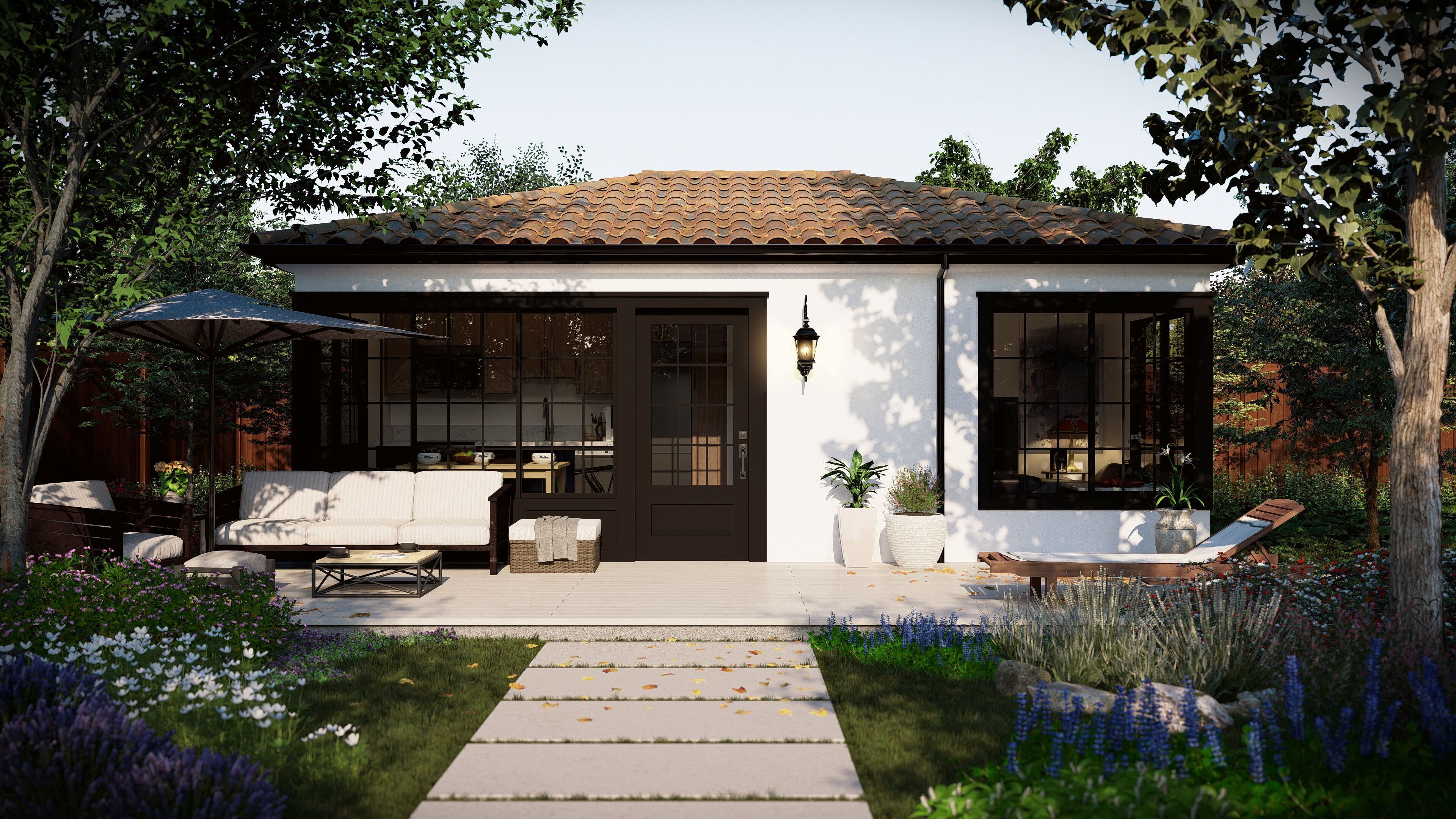
The real question isn't what you'll spend to build an ADU in Los Angeles — it's how well that ADU will perform over the next 10 to 20 years.
"The cheapest ADU is the smartest investment."
That's what most homeowners across the Westside, San Fernando Valley, and San Gabriel Valley believe when they first start exploring an ADU.
Spend less. Build faster. Get it rented. Start generating income.
On paper, it sounds logical.
But here's the reality: the lowest-cost ADU is almost never the best-performing investment — especially in high-demand markets like Los Angeles, where renters have real options and expectations are high.
Small differences in design and build quality translate directly into thousands of dollars per year. The gap between a basic ADU and a well-designed one doesn't show up once — it shows up every single month.
In rental income. In tenant quality. In vacancy rates. In maintenance costs. In long-term property performance.
ADUs aren't just structures. They're income-producing assets. And like any investment, the outcome isn't determined by what you spend — it's determined by how well it performs over time.
How Much Does It Cost to Build an ADU in Los Angeles in 2026?
Before we get into performance, let's ground this in real numbers.
In 2026, the cost to build an ADU in Los Angeles typically falls between $180,000 and $400,000 or more, depending on type, size, finish level, and site conditions. Per-square-foot costs generally range from $250 to $400 for new construction, with premium builds on hillside lots or in high-cost Westside neighborhoods pushing beyond $500 per square foot.
Here's how costs break down by ADU type across the Los Angeles market:
Garage Conversions typically run $100,000 to $225,000. The structure already exists, so you're mainly paying for insulation, drywall, plumbing, electrical, HVAC, kitchen, and bathroom. This is often the most affordable entry point — but the scope of structural and code upgrades can narrow the gap with new construction quickly.
Detached ADUs — standalone backyard units — generally cost $200,000 to $400,000 or more for a one-story, 800 to 1,200 square foot unit. Two-story designs push costs higher, but they also unlock more square footage on tighter lots. In premium Westside areas like Santa Monica, Culver City, and Mar Vista, expect to be at the higher end of this range. In the San Fernando Valley — Sherman Oaks, Encino, Studio City, Northridge — costs tend to land in the $250 to $350 per square foot range.
Beyond the construction itself, homeowners need to budget for soft costs: architectural design ($8,000 to $20,000), structural engineering, Title 24 energy compliance, and permits. Permit costs in Los Angeles range from $5,000 to $25,000 depending on project scope and jurisdiction. Los Angeles County contains 88 incorporated cities, each with its own fee schedules.
And in 2026, tariff-driven material cost increases have added an estimated 8 to 15 percent to overall construction costs compared to early 2024 pricing.
The bottom line on cost: most homeowners building a well-designed, mid-range detached ADU in Los Angeles should plan for $300,000 to $380,000 all-in for a 1,000 to 1,200 square foot unit.
But cost is only half the equation. The more important question is what that investment actually does over time.
The Shift Most Los Angeles Homeowners Miss
In the early stages, most homeowners approach ADUs like construction projects.
They focus on minimizing cost, staying within budget, and cutting unnecessary expenses.
But in markets like the Westside, the Valley, and the San Gabriel Valley — where land is scarce and rental demand is consistently strong — that approach often leaves money on the table.
The more effective question is: What kind of ADU will perform the best over the next 10 to 20 years?
Because once your ADU is built, it doesn't just sit there. It either generates strong, consistent income — or quietly underperforms. And in a high-cost region like Los Angeles, underperformance compounds quickly.
Research from the Freddie Mac ADU overview and studies from the UC Berkeley Terner Center confirm that ADUs have become a critical source of housing supply in California — with demand driven heavily by rental income potential and long-term flexibility.
Performance — not just cost — is what determines success.
How Much Rent Can an ADU Generate in Los Angeles?
One of the most common questions homeowners ask is: What can I actually rent an ADU for?
In Los Angeles, the answer depends heavily on neighborhood, design, and build quality.
Westside (Santa Monica, Culver City, Mar Vista, Venice, West LA): Well-designed ADUs command $2,800 to $4,200 per month. This is one of the strongest rental submarkets in the city — and renters here are discerning. Design, privacy, and livability matter enormously.
San Fernando Valley (Sherman Oaks, Studio City, Encino, Northridge, Van Nuys): ADU rents typically range from $2,000 to $3,200 per month. The Valley is a growing market with strong demand driven by good schools, entertainment industry proximity, and 405 freeway access to the Westside job corridor.
San Gabriel Valley (Pasadena, Glendale, Eagle Rock, Arcadia, Monrovia): Rents generally fall between $1,800 and $2,800 per month, with upward pressure from transit improvements, university proximity, and emerging demand from young professionals.
A more basic ADU — functional but unremarkable — typically rents at the low end of these ranges: $1,800 to $2,200 per month.
A well-designed, higher-quality ADU often rents $800 to $1,000 more per month in the same neighborhood.
That difference adds up faster than most homeowners expect. Over the course of a year, it's an additional $9,600 to $12,000 in income. Over 10 years, it can exceed $100,000.
This aligns with broader housing research showing that higher-quality rental housing consistently commands premium pricing due to livability, design, and tenant demand.
Is a More Expensive ADU Worth It?
This is the moment where most homeowners pause.
An additional $100,000 upfront can feel significant.
But the more useful question isn't whether it costs more. It's: What does that additional investment actually do over time?
In most Los Angeles scenarios, it leads to higher monthly income, more consistent occupancy, longer tenant stays, and lower maintenance costs.
And importantly, it also impacts how the property performs in the resale market. ADUs in Los Angeles typically add $200,000 to $500,000 in property value, depending on neighborhood and quality. A permitted ADU typically increases overall property value by 20 to 30 percent.
The Appraisal Institute notes that income-producing residential properties are often evaluated based on their income potential. That means a higher-performing ADU doesn't just generate more rent — it contributes more meaningfully to overall property valuation.
Why Higher-Quality ADUs Attract Better Tenants in LA
In competitive rental markets like Los Angeles, tenant behavior follows a clear pattern.
Basic units attract renters looking for the lowest price. Higher-quality units attract renters looking for a better living experience.
Across the Westside, the Valley, and the San Gabriel Valley, that includes professionals working in entertainment, tech, and healthcare. Dual-income households. Remote workers. Small families.
These tenants prioritize privacy, natural light, functional layouts, and quiet, comfortable living environments. They're willing to pay more for it. And they tend to stay longer — reducing turnover, vacancy, and management friction.
This trend is supported by broader housing studies from organizations like the National Association of Realtors, which consistently show that quality and livability directly influence both rental demand and occupancy stability.
The Hidden Cost of "Saving Money" Upfront
Trying to minimize upfront cost can feel like a smart financial decision. But in practice, those savings often show up later in less obvious ways.
Lower-cost ADUs tend to experience more frequent repairs, faster wear and tear, higher maintenance costs, and increased vacancy between tenants.
Over time, these factors reduce overall performance. Construction data consistently shows that higher-quality materials and better execution lead to lower long-term ownership costs. Research on property maintenance confirms that reactive maintenance on lower-quality construction costs 25 to 30 percent more than preventive maintenance on well-built systems.
Durability isn't just about convenience — it's about financial performance.
Do ADUs Increase Property Value in Los Angeles?
Yes — but not all ADUs contribute equally.
A basic ADU may increase square footage and provide modest utility. But a well-designed ADU does something more powerful: it creates reliable income potential, strong tenant demand, and a flexible living solution for future use.
In high-cost regions like Los Angeles, buyers are especially sensitive to income potential. ADUs that demonstrate strong rental performance and livability tend to stand out more in the market. They're not just seen as extra space — they're seen as a fully functional asset.
Los Angeles County homes with ADUs have been shown to sell for roughly 24 percent more than comparable properties without them — a premium that increases with the quality and income potential of the unit.
The Human Side of the Investment
Not every ADU is built purely for income.
Many Los Angeles homeowners build ADUs for aging parents. For adult children navigating one of the most expensive housing markets in the country. For long-term flexibility. For future downsizing.
And when that's the case, expectations shift immediately. You're no longer asking "what's the cheapest option?" You're asking "would this feel like home?"
That means good design matters. Comfort matters. Privacy matters.
And here's the key connection: those same qualities are exactly what the rental market rewards. The spaces that feel better to live in are the ones that perform better over time.
A 10-Year Perspective on ADU Performance in Los Angeles
When you step back and look at the bigger picture, the difference becomes clear.
A lower-cost ADU may generate around $240,000 in rental income over 10 years.
A higher-quality ADU — in the same neighborhood, on the same property — may generate closer to $340,000 to $400,000 over the same period, particularly in stronger Westside and Valley submarkets.
At the same time, the impact on overall property performance is often significantly stronger for higher-performing ADUs due to their income potential and broader appeal.
When combined, the difference between the two approaches can exceed $200,000 over a decade.
This is the compounding effect of better design, better construction, and stronger market demand.
What to Look for When Planning an ADU in Los Angeles
If your goal is to build an ADU that truly performs — whether in Sherman Oaks, Pasadena, Culver City, or anywhere across the LA basin — the focus should shift away from minimizing cost and toward maximizing long-term outcomes.
That starts with design — creating a space that feels open, functional, and private.
It continues with build quality — ensuring the structure will hold up over time with durable materials, proper engineering, and construction that meets California's residential building standards.
And it requires thinking from both perspectives: Would a high-quality tenant choose to live here? Would you or your family feel comfortable here long-term?
If the answer is yes, you're building in the right direction.
The Bottom Line
The difference between an average ADU and a high-performing one isn't just how it looks. It's how it works — month after month, year after year.
In markets like the Westside, San Fernando Valley, and San Gabriel Valley, where demand is strong and expectations are high, that difference becomes even more pronounced.
A better ADU doesn't just generate more income. It attracts better tenants. It reduces long-term costs. It strengthens overall property performance.
And most importantly, it creates a space people genuinely want to live in.
Because in the end, that's what drives everything. Not the price you paid to build it. But how well it performs — for your family, your tenants, and your future.
Live better. Earn more. Grow in value.
That's what happens when you build an ADU designed to perform.
Frequently Asked Questions: ADU Costs in Los Angeles
How much does an ADU cost in Los Angeles in 2026? Most homeowners should budget $180,000 to $400,000 or more, depending on ADU type, size, finish level, and site conditions. Per-square-foot costs generally range from $250 to $400 for new construction. Garage conversions start around $100,000 to $225,000.
How much rent can I charge for an ADU in Los Angeles? Rental income varies by neighborhood and quality. Westside ADUs command $2,800 to $4,200 per month. San Fernando Valley units rent for $2,000 to $3,200. San Gabriel Valley ADUs range from $1,800 to $2,800. Higher-quality, well-designed units consistently rent at the top of these ranges.
Does an ADU increase property value in Los Angeles? Yes. ADUs typically add $200,000 to $500,000 in property value in the LA market, and permitted ADUs generally increase overall property value by 20 to 30 percent, depending on neighborhood and unit quality.
Is it worth spending more to build a higher-quality ADU? In most Los Angeles scenarios, yes. A higher-quality ADU generates more rental income, attracts more stable tenants, reduces maintenance costs, and contributes more to overall property value. The additional upfront investment typically compounds over time through stronger financial performance.
What is the cost per square foot to build an ADU in Los Angeles? In 2026, expect $250 to $400 per square foot for new construction. Premium builds on the Westside or hillside lots can exceed $500 per square foot. Garage conversions generally run $150 to $250 per square foot. Keep in mind that smaller ADUs have higher per-square-foot costs because fixed expenses like kitchens, bathrooms, and utility connections don't scale down proportionally.
How long does it take to get ADU permits in Los Angeles? Under current California law (AB 1332), cities must approve or deny complete ADU applications within 60 days. Pre-approved plans can be permitted in as little as 21 to 30 days. Actual timelines vary by jurisdiction and project complexity.