.png)


When Does a Custom ADU Make Sense for Your Property?
Accessory Dwelling Units have become one of the most practical ways for Bay Area homeowners to add flexible living space. They can house family members, support rental income, or simply make a property more adaptable as life changes.
But once homeowners decide to build an ADU, another question usually follows:
Should the project use a pre-designed model, or is a custom ADU the better choice?
For many properties, standardized plans work well and can simplify the process. However, there are situations where a custom design offers clear advantages. When the design responds directly to the property and the homeowner’s long-term goals, the ADU often performs better over time, both functionally and financially.
The difference is not just aesthetic. A carefully planned custom ADU can improve privacy, maximize the use of the lot, and contribute meaningfully to overall property value.
Why some properties benefit from a custom ADU
Every property has its own constraints and opportunities. Lot size, slope, landscaping, neighboring homes, and existing structures all influence how an ADU should be positioned and designed.
Standardized ADU layouts assume relatively straightforward conditions. But when the property presents unique circumstances, a custom design allows the project to adapt rather than forcing the site to accommodate a fixed plan.
Homeowners often pursue custom ADUs when:
- the lot has unusual dimensions or elevation changes
- the main home has a distinctive architectural style
- the ADU must fit within a carefully landscaped property
- privacy between structures is especially important
- the unit may serve multiple purposes over time
Design flexibility allows the structure to feel integrated with the property instead of appearing as an afterthought.
Designing for how the space will be used later
One of the most important advantages of custom design is the ability to plan for future needs, not just current ones.
An ADU built for a specific situation today can easily serve different roles over the years. A homeowner might initially build the unit for a returning adult child, but later use it for rental income or aging parents.
When the layout anticipates these transitions, the space remains useful regardless of how family circumstances evolve.
This type of long-term thinking often influences decisions such as:
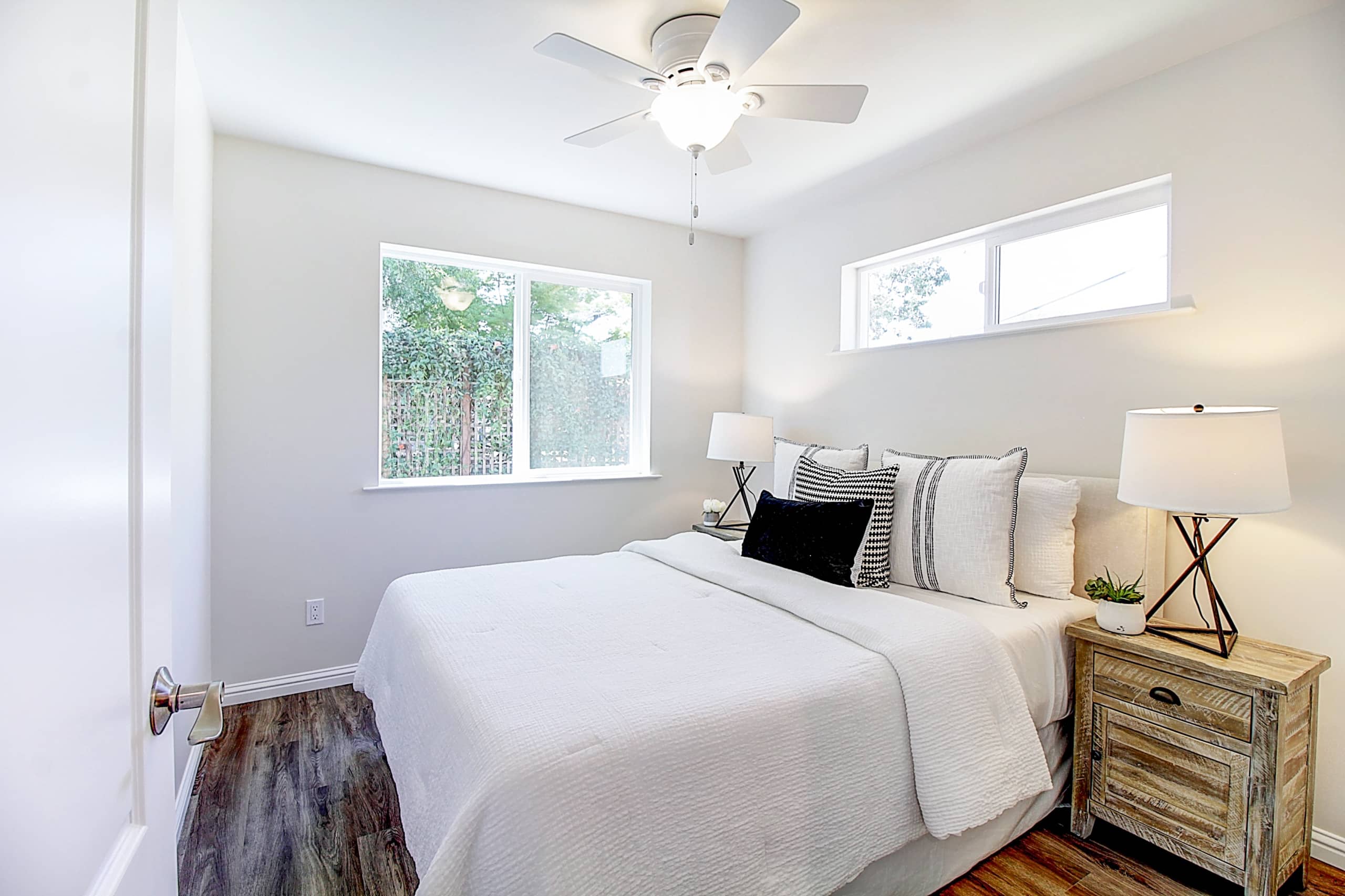
- separating living and sleeping areas
- incorporating a full kitchen rather than a kitchenette
- creating independent outdoor access
- designing flexible interior layouts
These choices can dramatically improve the usefulness of the ADU over time.
The role of architecture in property value
In neighborhoods with established architectural character, the relationship between the ADU and the main home matters.
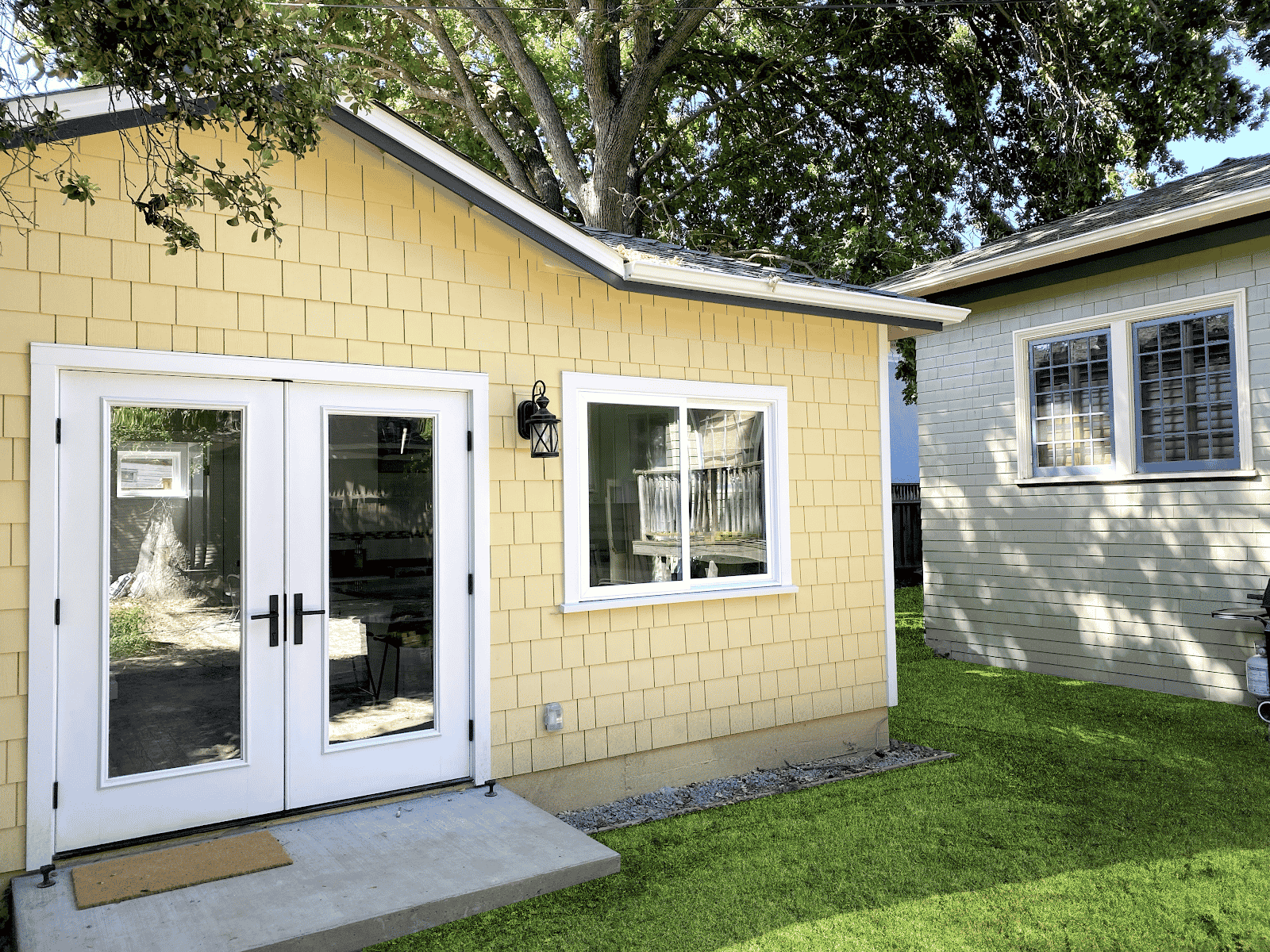
A custom design makes it possible to match rooflines, materials, window proportions, and exterior details so the new structure feels like a natural extension of the property.
This type of architectural consistency often improves curb appeal and protects the overall aesthetic of the home.
When the ADU complements the primary residence instead of competing with it, the property feels more cohesive. For homeowners thinking about resale value years down the road, this integration can make a meaningful difference.
How layout and placement influence daily living
The physical placement of an ADU on the lot can determine how comfortable the space feels for both households.
Standardized plans sometimes assume simple placement at the back of the property. In reality, the best location may depend on sunlight, landscaping, access paths, and sightlines between buildings.
A custom design process allows the structure to be positioned in a way that improves everyday living.
For example, thoughtful placement can:
- maintain privacy between the ADU and the main house
- preserve existing trees or garden space
- capture natural light throughout the day
- reduce noise between households
These decisions affect the experience of the space long after construction is complete.
Thinking beyond the lowest construction cost
Many homeowners begin an ADU project focused on minimizing upfront costs. While budget considerations are important, the long-term performance of the structure often matters more.
An ADU built with durable materials and thoughtful design typically requires less maintenance over time and remains attractive for future occupants.
When homeowners think of the ADU as a long-term property asset rather than a short-term construction project, priorities tend to shift toward quality, durability, and livability.
This perspective often leads to better outcomes over the life of the property.
Navigating local ADU regulations
Although California has expanded ADU opportunities statewide, local planning departments still influence what can be built on a particular property.
Cities throughout Silicon Valley, including San Jose, Palo Alto, Campbell, and Morgan Hill, have development standards that address:
- allowable ADU size
- height limits
- setbacks from property lines
- relationships to the main residence
Understanding these regulations early in the process helps prevent costly redesigns later.
For custom ADUs in particular, a feasibility review allows designers to evaluate the site conditions and determine which approaches will align with local requirements before detailed plans are created.
How Acton ADU approaches custom projects
Acton ADU has been designing and building backyard homes across Silicon Valley for more than three decades. Over that time, the team has worked with a wide range of properties, from compact suburban lots to large estate homes.
Custom projects begin with an evaluation of the property to understand what is possible within local regulations and site conditions.
From there, the design process focuses on creating a structure that fits naturally within the property while supporting long-term functionality.
Rather than approaching the project as a stand-alone building, the goal is to create a space that enhances how the entire property works.
For many homeowners, this approach results in an ADU that delivers stronger long-term performance through thoughtful design and professional execution.
Is a custom ADU right for your property?
Not every project requires a custom design. Pre-designed ADU plans can be a practical solution when the property is straightforward and the homeowner’s needs align with existing layouts.
But when the property has unique characteristics or the homeowner wants the ADU to play a larger role in the future of the home, a custom approach can offer important advantages.
The first step is understanding what the property can realistically support.
From there, homeowners can explore design options that balance practicality, long-term flexibility, and the overall value of the property.