.png)


In Menlo Park, homes are more than real estate assets. They are long-term family anchors, places where multiple generations gather, grow, and support one another. As housing costs rise and family dynamics evolve, more homeowners are rethinking how their properties can serve not just today’s needs, but decades into the future.
That shift has fueled a growing interest in multigenerational living, particularly through high-quality, detached guest houses designed for aging parents or adult family members. In Menlo Park, where larger lots and strong property values create unique opportunities, these backyard homes are increasingly seen as a way to preserve independence while keeping families close.
For over 35 years, Acton ADU has helped families navigate the design, permitting, and construction of guest houses that feel permanent, intentional, and built to last. This guide walks through why multigenerational living is reshaping Menlo Park, how to plan responsibly, and what to expect when building a legacy-focused guest house in this highly regulated market.
Why Multigenerational Living is Reshaping Menlo Park
Menlo Park sits at the intersection of rising property values, aging demographics, and a renewed emphasis on family connection. For many homeowners, the question is no longer whether multigenerational living makes sense, but how to do it well.
One of the strongest drivers is the cost of housing in the Peninsula. Purchasing a second home nearby for aging parents is often impractical, even for high-equity homeowners. A detached guest house allows families to use their existing property more efficiently while maintaining long-term flexibility.
Beyond finances, there are meaningful lifestyle benefits. A thoughtfully designed guest house gives aging parents independence, privacy, and dignity, while still providing proximity to family support. Daily check-ins become effortless, and emergencies are easier to manage without sacrificing autonomy.
Multigenerational living also strengthens family bonds across age groups. Grandparents can participate more fully in family life, while adult children benefit from shared childcare and intergenerational connection. In Menlo Park, where lot sizes often allow for separation between structures, families can achieve this closeness without crowding.
The local housing stock supports this trend. Many Menlo Park properties are well-suited for detached guest houses that feel like true secondary homes, not afterthoughts. When designed correctly, these structures integrate seamlessly into the property and support aging in place for years to come.
Designing for Family: Balancing Privacy with Accessibility
Design is where multigenerational guest houses succeed or fail. The goal is to create a space that feels independent and private, while remaining safe, accessible, and connected to the main home.
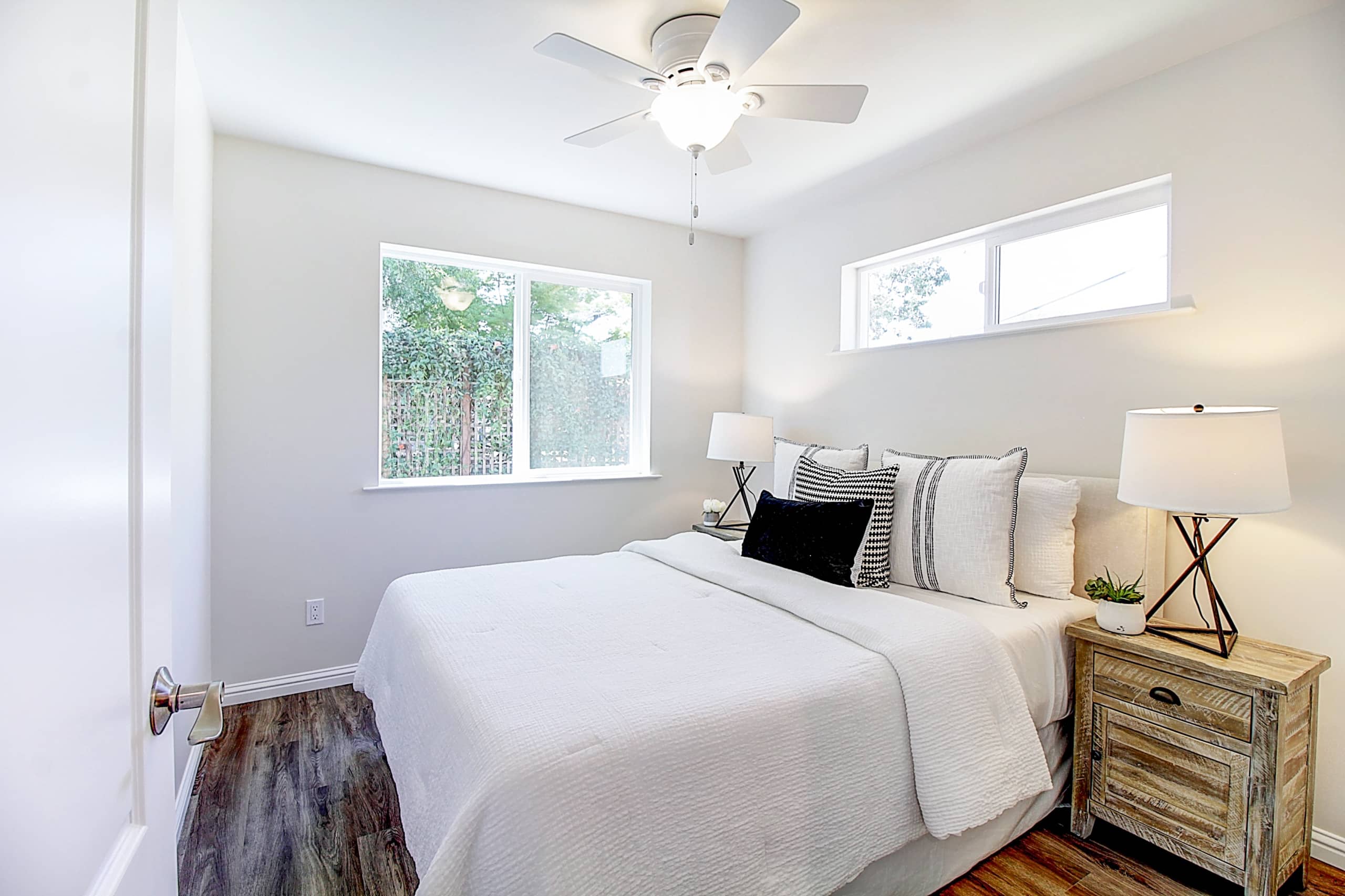
Privacy begins with orientation. Strategic placement of windows, entrances, and outdoor spaces helps ensure that neither household feels overlooked. Separate entry paths and thoughtful landscaping allow parents to come and go freely without feeling monitored or intrusive.
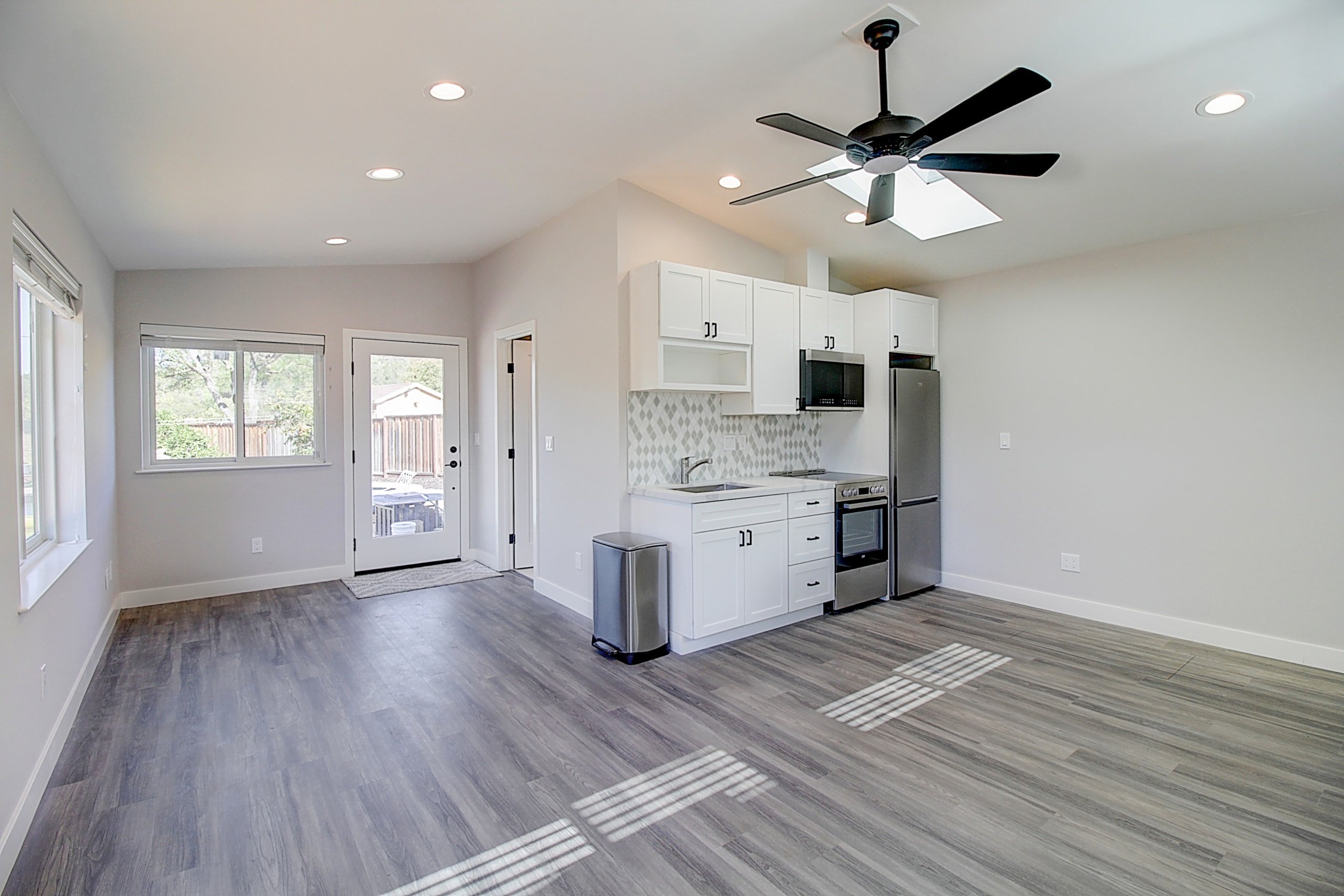
Accessibility is equally critical. An aging-in-place guest house should be designed for today’s mobility needs and tomorrow’s changes. This does not mean clinical or institutional design. It means integrating universal design principles subtly and beautifully.
Key accessibility features often include:
- Wider doorways and hallways for mobility aids
- No-step or low-threshold entrances
- Curbless showers with slip-resistant flooring
- Lever-style door handles and faucets
- Reinforced walls for future grab bars
- Single-level layouts with minimal transitions
Outdoor spaces play an important role as well. Patios, garden paths, and shared courtyards can act as buffer zones that allow interaction when desired and separation when needed. These transitional spaces are especially valuable for maintaining healthy family dynamics over time.
Acton ADU specializes in custom layouts that maximize square footage without feeling compressed. Storage, natural light, and clear circulation patterns all contribute to a home that feels calm, dignified, and permanent. When privacy and accessibility are balanced intentionally, the guest house becomes a true extension of the family home.
Navigating Menlo Park Regulations: Zoning, Trees, and Permits
Before design begins, it is essential to understand the regulatory landscape. Menlo Park has some of the most detailed planning requirements in San Mateo County, and early clarity prevents costly missteps.
Can you remove heritage trees to build a guest house in Menlo Park?
In most cases, removal of protected heritage trees is heavily restricted. Menlo Park’s tree ordinances are strict, particularly for mature redwoods and oaks. Designs typically must work around protected trees rather than assume removal.
The process starts with a feasibility study. This review evaluates zoning, setbacks, floor area ratios, and local overlays specific to Menlo Park and San Mateo County. It also identifies environmental constraints, including tree protection zones and utility easements.
Permitting often requires coordination with multiple departments. Arborist reports, planning review, and neighborhood considerations all play a role. These steps can feel overwhelming for homeowners unfamiliar with the process.
This is where experience matters. Acton ADU manages the full administrative burden, including coordination with the Planning Department, arborists, and city reviewers. Their team understands how to interpret local codes and negotiate solutions that protect trees while still achieving functional designs.
Understanding setbacks and allowable building envelopes early allows families to plan realistically. When regulatory constraints are addressed upfront, design decisions become clearer and timelines more predictable.
The Investment: Costs and Value in the Current Market
Building a custom guest house in Menlo Park is a significant investment, and homeowners deserve realistic expectations.
Current costs reflect several factors:
- Local labor rates and skilled trades
- Premium material standards
- Regulatory compliance and permitting fees
- Engineering, energy, and accessibility requirements
Acton ADU offers both Build Ready and fully custom options. Build Ready plans provide transparency and cost control through proven layouts, while custom designs allow families to tailor every detail to specific needs. The distinction helps homeowners choose the right balance between predictability and personalization.
Value extends beyond immediate returns. A well-built guest house increases overall property value and preserves long-term flexibility. It can serve as housing for parents today, adult children tomorrow, or a private rental in the future if needs change.
For many families, the most meaningful value lies in avoiding assisted living costs, maintaining family stability, and providing aging parents with a safe, familiar environment. When viewed through this lens, the investment supports both financial and emotional well-being.
Timeline Expectations: From Feasibility to Keys in Hand
Planning for a guest house requires patience and foresight. In Menlo Park, realistic timelines help families coordinate life transitions without unnecessary stress.
Most projects span approximately 9 to 14 months from initial feasibility to move-in. Permitting timelines are the most variable factor, influenced by city workload and project complexity.
Phase 1: Feasibility and Design (1-2 months)
This phase confirms what is possible on the property and establishes the design direction. Zoning, trees, utilities, and accessibility needs are evaluated together.
Phase 2: Permitting and City Approval (3-6 months)
Plans are reviewed by the city, with potential revisions based on feedback. Arborist input and planning review are common during this stage.
Phase 3: Construction (4-6 months)
Once permits are issued, construction begins. Site preparation, inspections, and quality control are managed throughout until final sign-off.
Acton ADU’s streamlined process helps reduce uncertainty by managing each phase proactively and keeping families informed at every milestone.
Building with Confidence
Building a multigenerational guest house in Menlo Park is both a practical decision and a deeply personal one. It reflects a commitment to family, independence, and long-term planning.
Success depends on more than design. It requires a clear understanding of regulations, realistic budgeting, and thoughtful attention to accessibility and privacy. When these elements are addressed early, the result is a home that supports aging in place and strengthens family connection.
With over 35 years of experience serving Menlo Park, San Mateo County and the Bay Area, Acton ADU brings the local knowledge and craftsmanship required to build with confidence. Their design-build approach ensures that families can focus on what matters most while every technical detail is handled with care.
Ready to discuss your family’s future? Schedule a free feasibility consultation with Acton ADU to see what is possible on your property.
Get Started Now!